
Benefits & Limitations
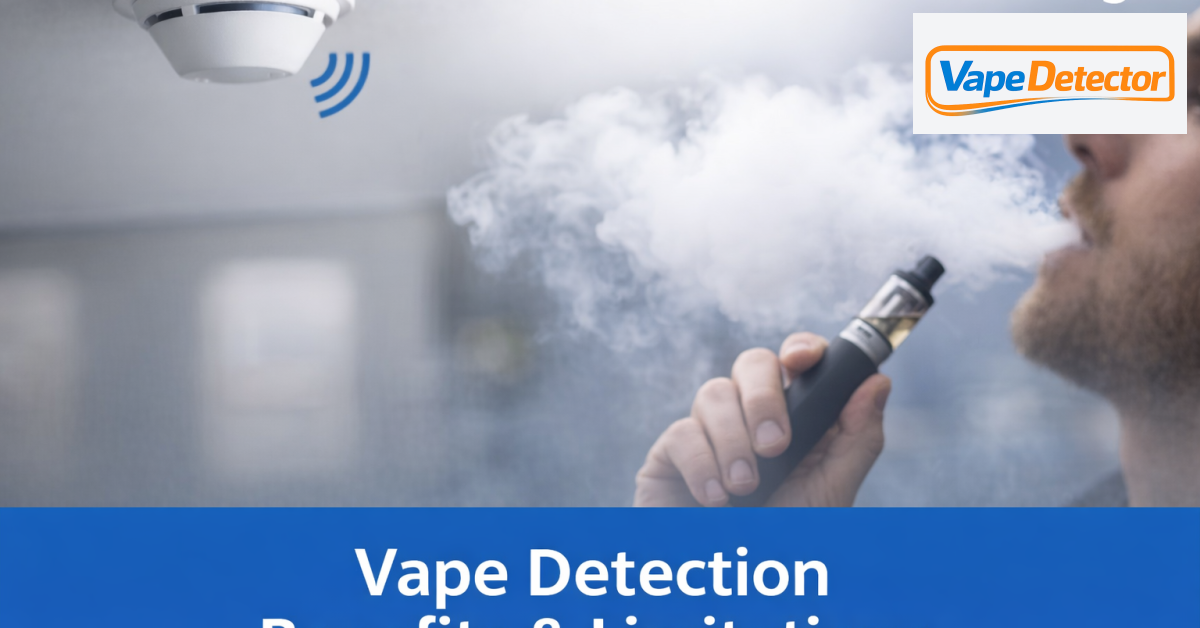
Vape detectors and sensors provide automated monitoring for vaping aerosols in indoor spaces where vaping is restricted. They support quicker intervention, clearer incident records, and wider coverage than routine supervision alone. Performance varies by environment, device type, placement, and settings, so expectations need to match the site’s risks and operational capacity.
Benefits Of Vape Detectors And Sensors
Vape detectors and sensors improve visibility of vaping in higher-risk areas and speed up staff response. Detectors also support consistent policy enforcement, reduce disruption compared with frequent walk-throughs, and create logs that help incident reporting. Benefits depend on sensible placement, clear procedures, and staff training.
Early Detection Of Vaping In Restricted Areas
Early alerts help staff intervene before vaping becomes normalised in toilets, corridors, stairwells, or changing areas.
Real-Time Alerts And Faster Staff Response
Real-time notifications reduce delay between an incident and a response, which limits repeat behaviour.
Better Coverage Than Routine Supervision
Sensors provide continuous monitoring in areas that staff cannot observe safely or consistently.
Supports Policy Enforcement And Safeguarding
Consistent detection supports site rules and safeguarding processes when vaping links to other concerns.
Discreet Monitoring With Minimal Disruption
Discreet devices reduce the need for intrusive checks, especially in privacy-sensitive spaces.
Evidence Trails And Incident Reporting Support
Time-stamped logs support incident reports and trend analysis without relying on memory.
Deterrence And Behaviour Change
Visible policy messaging plus detection increases perceived risk of being caught, which deters use.
Safety And Fire Risk Reduction
Earlier intervention reduces risks from lithium battery failure, smoke, and tampering in enclosed spaces.
Limitations And Trade-Offs To Understand
Vape detection supports decisions, not certainty. Sensors indicate aerosol signatures consistent with vaping, but site conditions affect results. Limitations include non-detection of low-output devices, false alarms from aerosols, and dependence on power and connectivity. Clear escalation rules prevent overreaction and avoid unnecessary disruption.
Detection Does Not Equal Identification
A sensor alert does not confirm who vaped, only that a reading occurred in a location and time window.
False Positives And False Negatives
Aerosols from deodorant, steam, or cleaning products can trigger alerts, and some vape output stays below thresholds.
Device Placement And Airflow Constraints
Ventilation, open doors, and ceiling height change how aerosol reaches a sensor and affects sensitivity.
Variable Performance By Vape Type And Aerosol Output
Low-wattage devices and small puffs produce less detectable aerosol than higher-output devices.
Network, Power, And Connectivity Dependencies
Offline sensors delay alerts and logging, so resilience planning matters in critical areas.
Ongoing Maintenance And Calibration Requirements
Dust, blockage, and sensor drift reduce reliability without routine checks and cleaning.
Common Misconceptions And Unrealistic Expectations
Sensors do not replace staff supervision, CCTV, or safeguarding judgement; they reduce blind spots.
Privacy, Compliance, And Acceptable Use
Privacy controls determine whether monitoring is proportionate and acceptable, especially in toilets and changing areas. Most vape sensors focus on environmental readings rather than personal data, but alert logs still require governance. Transparent policies, appropriate signage, and restricted access to logs reduce risk and support lawful use in schools, workplaces, and public venues.
Data Types Collected And What Is Not Collected
Many systems record sensor readings, timestamps, device IDs, and alert status, not identities or images. For a deeper look at governance, proportionality, and handling alert logs, see privacy considerations for vape detectors alongside your site policy.
Signage, Policies, And Transparency Expectations
Clear notices and written policies explain where sensors operate, what triggers alerts, and how data is used.
Audio Recording Risks And When To Avoid It
Audio capture increases privacy risk and is often unnecessary; avoid it in privacy-sensitive spaces.
Access Control, Retention, And Audit Trails For Logs
Role-based access, defined retention periods, and audit trails reduce misuse and support accountability.
School, Workplace, And Public Venue Considerations
Schools prioritise safeguarding and proportionality, workplaces align with HR processes, and venues focus on customer safety and compliance.
Costs And Operational Impact
Costs include hardware, installation, connectivity, and ongoing service fees, plus the time needed to respond to alerts. Operational impact depends on staffing levels, escalation routes, and how often alerts occur. A realistic budget accounts for maintenance and the effort required to keep response consistent across shifts.
Upfront Hardware And Installation Costs
Costs vary by sensor type, mounting, power supply, and whether cabling or network upgrades are needed.
Subscriptions, Licensing, And Ongoing Fees
Some operators charge for dashboards, remote management, alert routing, and software updates.
Staff Workflows For Alerts And Escalation
Effective use needs a defined response target, a responsible role, and a clear escalation threshold.
Total Cost Of Ownership And Budget Planning
Total cost includes spares, replacements, maintenance time, and periodic reviews of settings and coverage.
Choosing The Right Approach For Your Site
Site layout and risk profile determine whether standalone sensors or integrated systems fit best. Good selection links coverage to specific problem areas and defines how alerts reach staff. Alternative controls, such as supervision changes and environmental adjustments, sometimes reduce risk with less complexity.
For more detail on common misconceptions and unrealistic expectations, remember sensors do not replace staff supervision, CCTV, or safeguarding judgement; they reduce blind spots.
Standalone Sensors Vs Integrated Systems
Standalone devices suit single locations, while integrated systems centralise alerts and support multi-building oversight.
Coverage Planning By Room Type And Risk Level
Toilets, stairwells, and secluded corridors often need denser coverage than open, supervised areas.
Alert Routing Options And Response Targets
Routing to on-site staff, security, or a control room works best when response time targets are explicit.
When Alternative Controls Fit Better
Improved ventilation, door management, supervision patterns, and education sometimes address the root issue more directly.
Visible policy messaging plus detection increases perceived risk of being caught, which deters use.
Installation And Performance Checks
Installation quality and commissioning tests largely determine reliability. A pre-install survey identifies airflow patterns, power options, and mounting points. Ongoing checks confirm sensors remain clean, connected, and configured to the site’s normal background conditions.
Before commissioning, review vape detector basics so placement, airflow assumptions, and alert settings align with how the technology works.
Pre-Install Survey And Placement Principles
Survey findings guide sensor height, distance from vents, and avoiding dead zones created by airflow.
Commissioning Tests And Baseline Settings
Commissioning uses controlled tests to confirm alert thresholds and reduce nuisance alarms from normal activity.
Ongoing Testing And Maintenance Schedule
Routine checks verify connectivity, clean sensors, and review logs for patterns that suggest drift or misuse. Earlier intervention reduces risks from lithium battery failure, smoke, and tampering in enclosed spaces, supporting safety and fire risk reduction.
Common Troubleshooting Scenarios
Troubleshooting often focuses on poor airflow positioning, blocked inlets, network dropouts, or overly sensitive thresholds.
FAQs
Vape detector capability varies by manufacturer, configuration, and environment. Questions usually focus on what is detected, whether personal data is captured, and how reliable detection is in toilets and changing areas. Legal and acceptable use depends on proportionality, transparency, and how alerts and logs are managed.
What Does A Vape Detector Detect?
A vape detector detects airborne aerosol patterns consistent with vaping and triggers an alert when readings exceed a set threshold.
Do Vape Sensors Record Video Or Audio?
Many vape sensors do not record video or audio, but some systems offer optional microphones; specifications confirm what is enabled.
Can Vape Detectors Identify A Specific Person?
Vape detectors do not identify a person; identification relies on staff observation or other compliant security measures.
How Accurate Are Vape Detectors In Toilets And Changing Rooms?
Accuracy depends on airflow, cubicle layout, ventilation rate, and placement, so commissioning tests matter more in these spaces.
Do Vape Detectors Work With All Vape Types?
Detectors respond best to higher aerosol output; very low-output devices and brief puffs reduce detectability.
Are Vape Detectors Legal To Use In Schools And Workplaces?
Use is lawful when deployed proportionately, with clear policies, appropriate signage, and controlled access to alert logs.
Conclusion
Vape detectors and sensors deliver earlier awareness, faster response, and better coverage in hard-to-supervise areas, while supporting incident records and safety objectives. Limits include variability by environment, the need for maintenance, and the fact that detection does not identify individuals. Clear governance, realistic expectations, and good installation practices determine whether the technology improves outcomes on a specific site.