
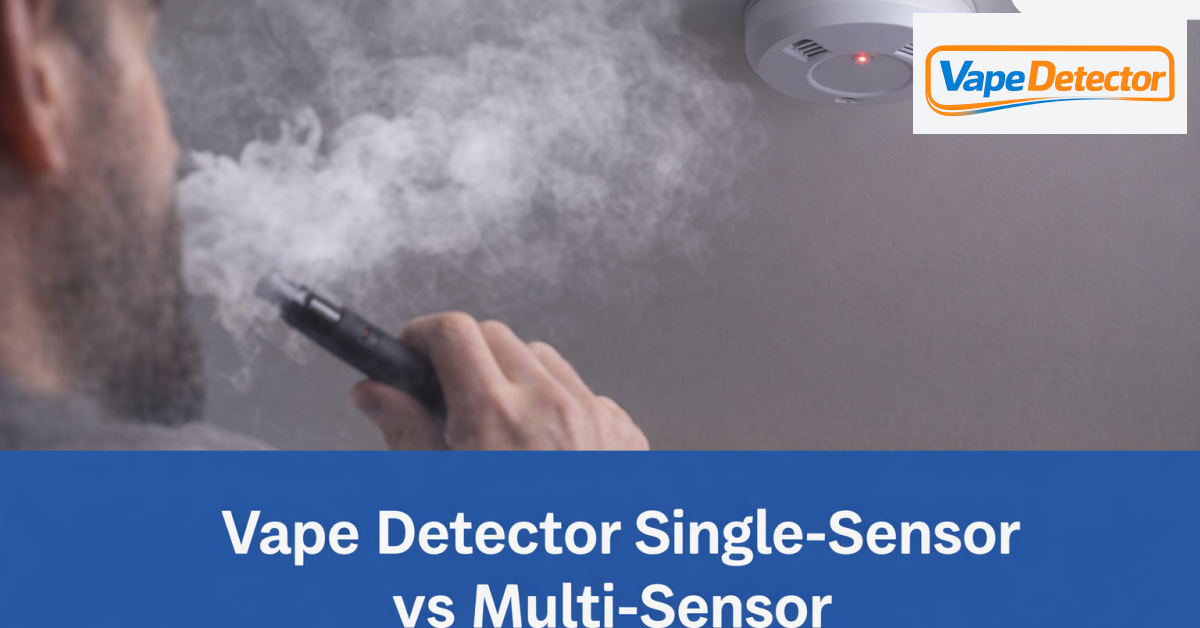
Vape Detector Single-Sensor vs Multi-Sensor
Single-sensor vape detectors monitor one measurement type, while multi-sensor units combine several inputs to judge whether vaping is present. The practical difference shows up in busy UK buildings where aerosols, ventilation changes, and occupant behaviour create false alarms or missed detections. Choosing between the two depends on the space, the acceptable disruption from alerts, the need for audit trails, and the budget for installation and ongoing support.
Key Terms And Sensor Types
Single-sensor and multi-sensor describe how many distinct sensing inputs a detector uses, not whether it is standalone or networked. Sensor choice affects reliability in toilets, corridors, and changing rooms where airflow and sprays are common. Technology selection also influences maintenance, because some sensors drift faster in humid or dusty areas.
What A Single-Sensor Vape Detector Means
A single-sensor vape detector uses one primary sensing method to infer vaping, such as particulate concentration or a gas signature.
What A Multi-Sensor Vape Detector Means
A multi-sensor vape detector combines two or more sensing methods and applies logic to confirm events before raising an alert.
Common Sensor Technologies Used In Vape Detectors
Vape detectors commonly use optical particulate sensors, VOC or gas sensors, and environmental sensors such as temperature and humidity to stabilise readings.
How Single-Sensor And Multi-Sensor Systems Work
Single-sensor systems trigger when one measurement crosses a threshold, so performance depends heavily on correct settings and stable airflow. Multi-sensor systems compare inputs to separate vaping-like patterns from background changes. Both types rely on local processing and, where fitted, network links for alerts and record keeping.
Detection Inputs And Signal Processing
Signal processing filters noise, tracks trends, and decides when a change is large enough to count as an event.
Calibration, Baselines, And Thresholds
Baselines represent normal air conditions for a location, and thresholds define the point where the detector flags unusual aerosol or gas levels.
Event Logging And Alerts
Event logging records time, location, and alarm state, while alerts deliver notifications via sounders, relays, or a network dashboard.
Accuracy And False Alarms In Real Buildings
Accuracy depends on how closely the detector’s trigger conditions match real vaping in that room. False alarms usually come from short, intense aerosol bursts or rapid environmental changes. Missed detections occur when vapour disperses too quickly or never reaches the sensor due to airflow patterns.
Common Causes Of False Positives
False positives often come from deodorant sprays, cleaning products, steam, high dust, or sudden humidity shifts.
Common Causes Of Missed Detections
Missed detections happen with strong extraction, open doors, large spaces, or vaping far from the sensor and outside the airflow path.
How Multi-Sensor Fusion Changes Reliability
Multi-sensor fusion improves reliability by requiring corroboration between inputs, reducing triggers from single-cause disturbances.
Coverage And Placement Requirements
Placement controls whether vapour reaches the sensor in time and at a detectable concentration. Smaller rooms with predictable airflow suit simpler setups, while complex spaces need more careful positioning. Mounting height, proximity to vents, and tamper risk often matter more than the sensor count.
Room Size, Airflow, And Dead Spots
Dead spots form where air stagnates or bypasses the detector, so positioning needs to follow real airflow, not just floor area.
Toilets, Changing Rooms, And Stairwells
Toilets and changing rooms combine humidity, sprays, and extraction fans, while stairwells create drafts that dilute vapour quickly.
Ducts, Ceilings, And Tamper Considerations
Ceiling mounting reduces obstruction but increases distance from some vapour plumes, and tamper protection matters in unsupervised areas.
Response Time And Operational Performance
Response time includes the time to sense a change and the time to confirm it as vaping. Higher sensitivity detects more events but increases nuisance alarms, especially in high-traffic washrooms. Ventilation and door position alter dilution, so consistent operational performance depends on stable conditions or adaptive logic.
Time To Detect Versus Time To Confirm
Time to detect is the first trigger, while time to confirm includes any filtering, multi-input checks, and alert delays.
Sensitivity Settings And Their Trade-Offs
Higher sensitivity increases detection likelihood but raises false alarm rates from aerosols and environmental swings.
Impact Of Ventilation And Open Doors
Extraction fans and open doors remove or dilute vapour, which reduces both detection speed and peak sensor readings.
Installation Complexity And Infrastructure
Installation differs by power needs, communications method, and integrations with existing systems. Standalone units suit small sites, while networked deployments support central oversight and consistent policy. Integration work often drives complexity more than the sensor type.
Power Options And Wiring
Power options include mains wiring and, for some models, battery operation, with wiring supporting relays and more reliable uptime.
Standalone Versus Networked Deployments
Networked deployments support central alerting and reporting, while standalone units rely on local indicators and simple outputs.
Integration With Fire Alarms, Access Control, And BMS
Integrations use relay outputs or network interfaces to pass events into access control or a building management system where permitted.
Data, Privacy, And Compliance Considerations
Vape detectors often store event logs and device status data, and some models add audio features for aggression or tamper detection. Data collection choices affect GDPR obligations, retention periods, and access controls. Site policy needs to match the venue type, especially where children or staff monitoring are involved.
Audio, Imaging, And What Vape Detectors Record
Many units record sensor events and timestamps, while some include microphones; imaging is less common and requires stricter governance.
GDPR Considerations For Logs And Alerts
GDPR compliance depends on lawful basis, data minimisation, retention, access control, and clear signage where monitoring occurs.
Policies For Schools, Workplaces, And Public Venues
Schools, workplaces, and public venues often require documented procedures for alerts, escalation, and appropriate staff access to logs.
Total Cost Of Ownership
Total cost includes hardware, installation time, and the ongoing cost of servicing and software. Multi-sensor devices often cost more upfront but may reduce staff time spent on nuisance alerts if configured well. Budgeting needs to account for dashboards, replacements, and support rather than unit price alone.
Upfront Hardware And Installation Costs
Costs depend on device price, mounting work, cabling, and any network hardware needed for central monitoring.
Ongoing Maintenance And Consumables
Maintenance covers cleaning, periodic checks, and replacement of parts where sensors degrade in harsh environments.
Software Licences, Dashboards, And Support
Dashboards and remote management often require licences and support plans, particularly for multi-site reporting.
Maintenance And Long-Term Reliability
Reliability depends on environmental exposure, configuration control, and routine testing. Toilets and kitchens accelerate contamination, which shifts baselines and raises false alarms. A maintenance plan reduces drift and keeps alert rules consistent after building changes.
Cleaning, Servicing, And Environmental Exposure
Dust, aerosols, and humidity affect sensors, so cleaning and inspection frequency needs to match the room conditions.
Firmware Updates And Configuration Management
Firmware updates address bugs and tuning, while configuration management keeps thresholds and alert routes consistent across devices.
Testing Procedures And Performance Checks
Performance checks use controlled tests and log reviews to confirm that alerts trigger appropriately and that sensors have not drifted.
Choosing Between Single-Sensor And Multi-Sensor
The decision comes down to how variable the environment is and how costly false alarms are for staff and occupants. Single-sensor units fit stable, low-interference rooms and simple alert needs. Multi-sensor units suit areas with sprays, steam, and changing ventilation where confirmation logic reduces disruption.
Best Fit Scenarios For Single-Sensor Detectors
Single-sensor detectors suit smaller, predictable spaces with limited aerosol sources and straightforward local alerting.
Best Fit Scenarios For Multi-Sensor Detectors
Multi-sensor detectors suit toilets, changing rooms, and complex airflow areas where multiple inputs help confirm events.
Decision Checklist For Buyers
Buyers get clearer outcomes by checking:
- Airflow stability and extraction strength in target rooms
- Likelihood of sprays, steam, and cleaning aerosols
- Required alert routing, logging, and integrations
- Maintenance capacity for cleaning and periodic testing
A shortlist based on these checks keeps the choice aligned with real building conditions. If you are weighing models side by side, our feature comparisons can help you match sensor type, logging, and integration needs to your site.
FAQs
Are Multi-Sensor Vape Detectors Always More Accurate?
Multi-sensor designs often reduce false alarms, but accuracy depends on placement, configuration, and the local environment.
Do Vape Detectors Work In Bathrooms With Strong Ventilation?
Strong ventilation reduces vapour concentration and detection time, so bathrooms often need careful placement and tuned settings.
Can Vape Detectors Differentiate Vaping From Aerosols Like Deodorant?
Some multi-sensor models separate patterns better than single-sensor units, but sprays still cause false positives in some settings.
Do Vape Detectors Record Audio Or Video?
Most devices record event data rather than video, and audio recording depends on the specific model and configuration.
How Often Do Vape Detectors Need Calibration Or Maintenance?
Maintenance frequency depends on exposure to steam, sprays, and dust, with toilets typically requiring more frequent checks than corridors.
Conclusion
Single-sensor vape detectors offer simpler deployment where conditions stay stable and nuisance aerosols stay low. Multi-sensor vape detectors handle real-world variability better by cross-checking inputs, which often reduces disruption from false alarms. Building airflow, room use, privacy requirements, and ongoing maintenance capacity determine which approach delivers the most reliable outcomes for UK sites.