
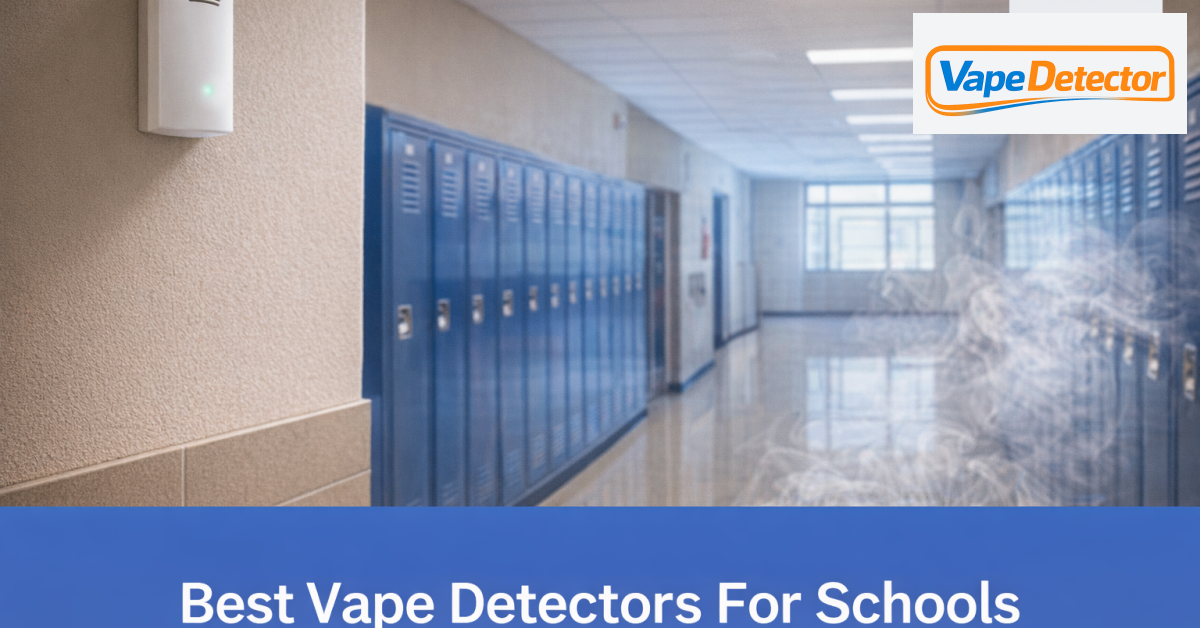
Vape Detectors for Schools
Schools use vape detectors and sensors to identify vaping in areas where staff supervision is limited. Vape detection supports safeguarding, reduces disruption, and helps schools apply behaviour policies consistently. Practical deployment depends on building layout, connectivity, and clear response workflows. Decision-makers often need clarity on what sensors detect, where they work best, and how alerts fit with day-to-day site management.
If you are weighing options by budget, features, or site constraints, our comparisons and best for guide can help narrow down suitable models.
Why Vape Detection Matters In Schools
Vaping in schools creates safeguarding and behaviour risks, especially in toilets and hidden corridors. Vape detection provides timely alerts so staff can respond quickly and deter repeat incidents. Schools also use detection data to identify hotspots and target supervision without increasing intrusive monitoring across the whole site.
Vape sensors matter most where incidents are frequent, supervision is limited, and smoke alarms do not provide reliable indication of vaping.
How Vape Detectors Work In School Settings
School vape detectors monitor air for vape aerosol and related chemical markers, then trigger an alert when readings pass a set threshold. Performance depends on airflow, placement height, and local sources of aerosols such as deodorant sprays. Reliable use requires defined staff actions after an alert and a process for checking repeat locations.
Sensor Types Used In Educational Buildings
Common sensor types include particulate sensing and gas sensing, sometimes combined. Multi-sensor devices help separate vaping from background aerosols, but schools still need site-specific calibration and sensible placement.
What A Vape Detector Detects And What It Does Not
A vape detector detects indicators associated with e-cigarette aerosol. A vape detector does not identify a specific person, confirm intent, or guarantee detection in highly ventilated areas. Some models support optional detection modes, but capabilities vary by manufacturer.
Alerting Methods And Response Workflows
Alerting methods include app notifications, email, SMS, and integrations to on-site systems. Response workflows usually assign a first responder, define attendance time, and record the outcome to reduce repeat incidents and false alerts.
Common Places Schools Install Vape Sensors
Schools place vape sensors where vaping is most likely and where privacy expectations limit direct supervision. Placement also considers ventilation, damage risk, and safe access for maintenance. Consistent positioning across similar rooms improves calibration and makes alert patterns easier to interpret.
Common locations include:
- Toilets and changing rooms
- Corridors, stairwells, and entrances
- Sixth form and social areas
Toilets And Changing Rooms
Toilets and changing rooms attract vaping because they offer privacy and short dwell times. Sensors need tamper resistance and careful positioning away from vents, hand dryers, and aerosol-heavy areas.
Corridors, Stairwells, And Entrance Areas
Corridors and stairwells act as movement routes and informal gathering points. Sensors work best where airflow is stable and where staff can reach the location quickly after an alert.
Classrooms, Sixth Form Areas, And Social Spaces
Classrooms usually present lower risk, but sixth form areas and social spaces can become hotspots. Sensors in shared spaces often need higher thresholds to reduce disruption from deodorant or cleaning products.
For post-16 settings, see our sixth form and colleges guide for placement and alerting considerations.
Choosing Vape Detectors For Schools
School selection focuses on coverage, reliability, and manageable alerting rather than maximum sensitivity. Schools also need clarity on data handling, safeguarding expectations, and maintenance access. A suitable specification matches the building’s connectivity, identifies who receives alerts, and sets boundaries on where sensors are appropriate.
Key selection checks include:
- Coverage and placement per room type
- Connectivity and power availability
- Tamper resistance and maintenance access
- Data privacy and safeguarding controls
For guidance tailored to age groups, timetables, and supervision patterns, see our secondary schools recommendations. If you are selecting devices for younger pupils, our primary schools guide covers age-appropriate placement, supervision patterns, and alert handling.
Coverage, Range, And Placement Considerations
Coverage depends on room volume, airflow, and obstructions. Placement near extraction points reduces effectiveness, while placement too close to doors increases contamination from corridor aerosols.
Power, Connectivity, And Network Requirements
Devices use mains power, PoE, or battery depending on model. Connectivity often relies on Wi‑Fi or Ethernet, so schools need to confirm network segmentation, signal strength, and permissions for alerts.
Tamper Resistance And Maintenance Access
Tamper-resistant housings, secure fixings, and alerting for device interference reduce downtime. Maintenance access needs safe working at height and minimal disruption to lessons and facilities.
Data Privacy, Safeguarding, And Compliance Considerations
Data privacy depends on what the device stores and who can access logs. Schools need clear retention periods, access controls, and documented purposes that align with safeguarding and internal policies.
Integration With Existing School Systems
Integration reduces response time and helps schools create consistent incident records. Schools often keep vape detection separate from life-safety systems, while still routing alerts to the right staff groups. Integration planning also clarifies accountability when multiple teams use different systems.
Typical integration touchpoints include:
- Notifications to staff channels
- Links to CCTV review processes
- Incident logging in school systems
Fire Alarm And Building Management Boundaries
Vape detectors do not replace fire detection and usually do not connect directly to fire alarm circuits. Building management links, where used, typically support monitoring and reporting rather than emergency activation.
CCTV, Access Control, And Incident Logging
CCTV integration usually means time-stamped alerts that help staff review footage in line with policy. Access control data can support investigations, but access and retention rules need to be defined.
Notification Rules For Staff And Site Teams
Notification rules set who receives alerts, at what times, and for which zones. Schools often use escalation so repeated alerts route to senior staff or safeguarding leads.
Installation Planning And Site Survey Basics
A site survey confirms where sensors perform reliably and where building conditions increase false alerts. Survey findings guide placement height, distance from vents, and connectivity choices. Schools also use surveys to plan installation times that minimise disruption and ensure safe access for contractors.
Common survey checks include:
- Ventilation and airflow patterns
- Wi‑Fi or Ethernet signal quality
- Sources of aerosols and steam
Building Layout, Ventilation, And Airflow Effects
Airflow disperses aerosols quickly in some rooms and concentrates them in others. High extraction, open windows, and frequent door opening affect detection speed and consistency.
Signal Strength Testing And Dead Spots
Signal testing identifies dead spots and roaming issues that delay alerts. Ethernet or PoE often suits problem areas, especially in toilets with poor Wi‑Fi penetration.
Minimising False Alarms In Busy Areas
False alerts often come from deodorant, cleaning sprays, steam, and crowd movement. Placement and thresholds need adjustment for changing rooms, entrances, and heavily used corridors.
Managing Alerts And Reducing Disruption
Alert management decides whether vape detection supports behaviour outcomes or creates noise. Schools need clear thresholds, practical response times, and consistent logging. Effective handling also reduces repeated callouts to the same area by identifying patterns and applying targeted supervision or controls.
Alert management usually involves:
- Sensitivity settings per zone
- A repeat-alert escalation process
- Basic incident recording
Setting Thresholds And Sensitivity
Thresholds set the balance between detection and disruption. Higher sensitivity increases detection but raises false alerts in aerosol-heavy spaces, so schools often set different profiles for toilets, corridors, and social areas.
Handling Repeated Alerts And Hotspots
Repeated alerts indicate either a genuine hotspot or a configuration issue. Hotspot management usually combines threshold review, placement checks, and targeted staff presence at specific times.
Recording Incidents And Pattern Monitoring
Incident records help identify times, locations, and repeat patterns. Pattern monitoring supports proportionate interventions and helps justify changes to placement, staffing, or policies.
Costs, Procurement, And Ongoing Support
Costs depend on device type, quantity, connectivity work, and the support model. Procurement also needs clarity on licensing, warranty terms, and who provides servicing. Schools benefit from quotes that separate hardware, installation, and ongoing fees so budgets remain predictable.
Common cost drivers include:
- Number of units and required coverage
- Installation complexity and cabling
- Software subscriptions and support
Typical Cost Drivers And What A Quote Includes
Quotes often include sensors, mounts, commissioning, and access to alerting software. Cabling, network changes, and building access arrangements often sit outside standard pricing.
Warranty, Calibration, And Servicing Expectations
Warranty terms vary by manufacturer and installer. Servicing expectations usually cover functional checks, firmware updates, and recalibration if readings drift or building use changes.
Training For Staff And Handover Requirements
Staff training covers alert handling, basic troubleshooting, and incident recording. Handover documentation needs device locations, settings, admin access, and escalation contacts.
Policy And Communication In Schools
Policies define how vape detection links to behaviour management and safeguarding. Clear communication reduces confusion about what sensors do and prevents inconsistent enforcement. Schools also need defined roles so alerts reach staff who can respond quickly and record outcomes.
Policy essentials often include:
- Behaviour and enforcement boundaries
- Parent and carer messaging
- Staff escalation paths
Student Behaviour Policies And Enforcement Boundaries
Behaviour policies set consequences and provide consistency across year groups. Enforcement boundaries define proportionate responses and clarify how staff handle searches, confiscation, and referrals.
Parent And Carer Communications
Parent and carer communications work best when they explain purpose, locations, and how data is used. Messages also need to clarify that sensors support safeguarding and do not identify individuals by themselves.
Staff Roles, Responsibilities, And Escalation Paths
Roles specify who responds to alerts, who records incidents, and who reviews patterns. Escalation paths help safeguarding leads and senior leaders intervene when repeated incidents occur.
FAQs
Schools often ask whether vape detectors record content, whether they detect specific substances, and how to manage maintenance and false alerts. Answers depend on device specification, placement, and how the school configures alert thresholds and workflows.
Do Vape Detectors Record Audio Or Video?
Most vape detectors function as environmental sensors and do not record audio or video. Some products integrate with CCTV systems for review, but recording depends on the CCTV system and school policy.
Do Vape Sensors Detect THC Or Cannabis Vapour?
Some models claim enhanced detection modes, but capability varies and depends on the substance and environment. Product documentation needs to state explicitly what is detected and under what conditions.
Are Vape Detectors Suitable For School Toilets?
Vape detectors suit toilets when installed with tamper resistance and configured for steam and spray sources. Placement away from vents and hand dryers reduces false alerts and improves consistency.
How Often Do Vape Detectors Need Maintenance?
Maintenance frequency depends on the manufacturer, environment, and whether the unit needs calibration. Schools typically plan routine functional checks and software updates, plus reactive checks after building changes.
How Do Schools Reduce False Alerts?
Schools reduce false alerts through careful placement, zone-specific sensitivity settings, and reviewing repeat triggers. Cleaning schedules and known aerosol sources also help explain and reduce spikes.
Conclusion
Vape detection in schools works best when devices, placement, and staff processes align with the building and behaviour policies. Practical site surveys, clear alert handling, and sensible thresholds reduce disruption and support consistent enforcement. Procurement decisions improve when quotes separate hardware, installation, and ongoing support, and when data privacy expectations are documented before rollout.