
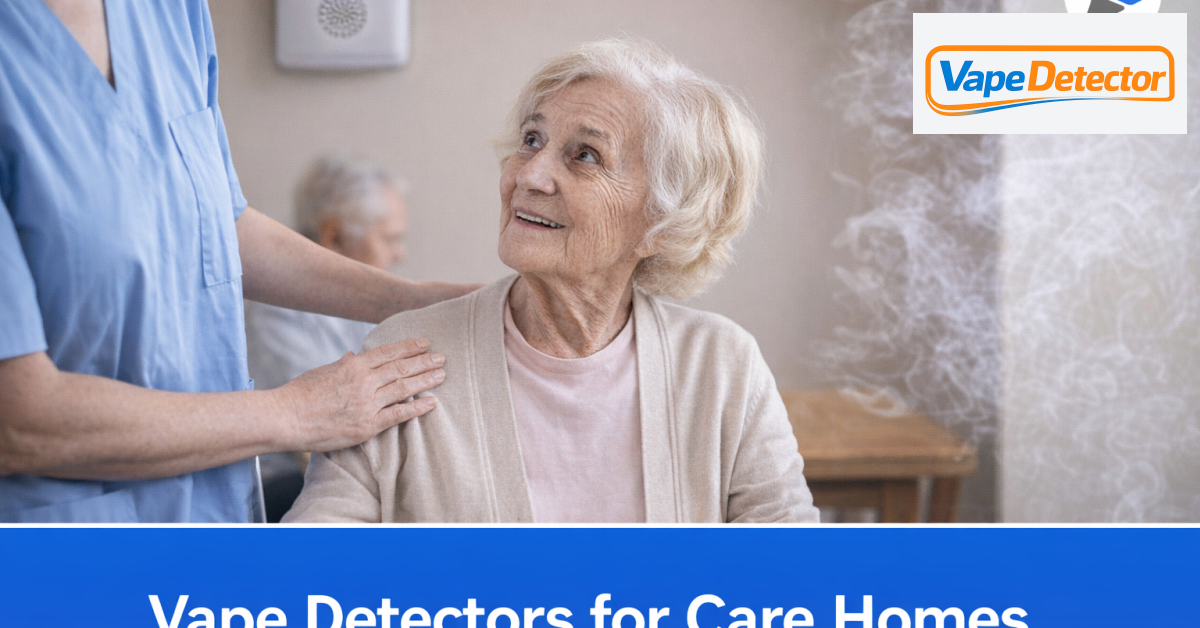
Vape Detectors for Care Homes
Vape detectors for care homes identify aerosol from e-cigarettes in indoor areas where vaping creates safeguarding, health, and fire safety concerns. Care settings often need rapid alerts, clear staff workflows, and reliable operation across bedrooms, communal spaces, and staff areas. Selecting the right device involves balancing sensitivity, privacy, installation practicalities, and ongoing maintenance.
What Vape Detectors Do In Care Homes
Vape detectors provide early warning of vaping in indoor areas by sensing airborne aerosol and generating an alert for staff response. Care homes often use them to support smoking and vaping policies, reduce nuisance incidents, and improve oversight in higher-risk locations without relying on continuous staff presence. Effective use depends on understanding what the sensor measures, how it differs from smoke detection, and what conditions commonly trigger alerts.
What A Vape Detector Is
A vape detector is a sensor unit that detects airborne particles and gases associated with e-cigarette aerosol and sends an alert to a local sounder, a staff device, or a monitoring system.
How Vape Detection Differs From Smoke Detection
Vape detection focuses on aerosol signatures from e-liquids, while smoke detection prioritises combustion products. A vape detector supports policy and safeguarding; a smoke alarm supports fire detection and evacuation.
When Vape Detectors Trigger Alerts
Vape detectors trigger when measured levels pass a set threshold for a defined time. Trigger likelihood rises in small rooms, poor ventilation, and repeated exhalations close to the sensor.
Why Care Homes Install Vape Detectors
Care homes install vape detectors to manage risk in places where vaping is prohibited or unsafe, and where staff need evidence-led, consistent responses. The main drivers relate to resident safety, safeguarding processes, and governance expectations around duty of care. Practical value comes from faster incident awareness, clearer documentation, and reduced reliance on ad-hoc reporting.
Resident Safety And Fire Risk Control
Resident safety improves when staff receive prompt alerts in rooms where oxygen use, mobility limits, or cognitive impairment increases harm from aerosol exposure or ignition sources.
Safeguarding, Staff Support, And Incident Reporting
Safeguarding benefits when alerts create time-stamped events that support incident logs, reduce disputes, and help staff respond consistently across shifts.
Compliance, Policies, And Duty Of Care Considerations
Care home policies often restrict vaping in bedrooms or communal areas. Vape detectors support policy enforcement and demonstrate proportionate controls where risks are foreseeable.
Care Home Areas That Benefit Most From Vape Detection
Placement matters more than device count. Care homes gain the most value in enclosed or unsupervised spaces where vaping creates risk, complaints, or repeated incidents. Area selection also affects privacy expectations and the likelihood of false alerts from sprays and cleaning. Prioritising locations by incident history and vulnerability supports proportionate coverage.
Bedrooms And Ensuite Bathrooms
Bedrooms and ensuites often present the highest unsupervised risk. Short-range aerosol builds quickly, especially with limited ventilation and closed doors.
Communal Toilets And Changing Areas
Communal toilets and changing areas often attract concealed vaping. Alerts support timely staff attendance without routine intrusion.
Staff-Only Areas And Storage Rooms
Staff-only areas and storage rooms may need protection where policies prohibit vaping near medicines, oxygen, or flammables, or where management requires consistent standards.
Corridors, Stairwells, And Entrance Areas
Corridors, stairwells, and entrances help identify patterns of movement and repeated hotspots. Wider airflow can reduce sensitivity, so placement needs testing.
Choosing Vape Detectors For Care Home Environments
Device selection affects sensitivity, alert speed, and operational workload. Care homes need detectors that perform in mixed-use buildings, tolerate cleaning regimes, and provide clear alerts without excessive false positives. Connectivity, power, and tamper resistance often determine reliability more than headline sensitivity. Match features to the care home’s response process and IT constraints.
Sensor Types And Detection Capability
Optical particle sensing and multi-sensor approaches detect aerosol more reliably across different e-liquids. Sensitivity settings help balance detection versus nuisance alerts.
Alert Methods: Local Alarms Vs Remote Notifications
Local alarms deter on-the-spot but can distress residents. Remote notifications support discreet response via staff devices or a control point.
Connectivity Options: Wi-Fi, Ethernet, And Cellular
Wi‑Fi suits many retrofits but depends on coverage. Ethernet offers stable connectivity. Cellular provides resilience where internal networks are limited.
Power Options: Mains, PoE, And Battery Backup
Mains power supports permanent locations. PoE simplifies wiring and central resilience. Battery backup reduces downtime during local power issues.
Tamper Resistance And Anti-Vandal Design
Tamper switches, secure fixings, and protected vents reduce interference. Anti-vandal housings suit shared areas and locations with repeat incidents.
For a quick shortlist, compare options that are best for healthcare settings and then match features to your care home’s response process and IT constraints.
Installation Planning And Placement
Installation planning links building layout, airflow, and staff response needs. Poor placement increases missed events and false alerts, which wastes staff time and undermines confidence. Retrofit constraints in occupied care homes also affect access, disruption, and cable routes. A basic plan that tests coverage in real conditions often delivers better outcomes than adding devices without validation.
Coverage Planning And Room Layout Factors
Room size, ceiling height, and door positions affect aerosol movement. Placement near typical vaping locations improves capture without over-covering irrelevant areas.
Mounting Height, Airflow, And Ventilation Considerations
Mounting height and proximity to vents change detection speed. Strong extraction in bathrooms can dilute aerosol, so sensors need careful siting.
Avoiding False Alarms From Aerosols And Cleaning Products
Cleaning sprays, deodorants, and some aerosols create particulate spikes. Settings and placement away from frequent spray points reduce nuisance alerts.
New Build Vs Retrofit Installation Approaches
New builds support structured cabling and PoE planning. Retrofits often rely on Wi‑Fi, surface trunking, and staged works to minimise resident disruption.
Alerts, Monitoring, And Integration
Alert handling determines whether vape detection improves safety and compliance or simply adds noise. Care homes often need discreet notifications, escalation rules, and integration with existing systems that staff already trust. Multi-site operators also need central visibility to spot trends and manage maintenance. Integration choices depend on technical capability and governance requirements.
Integration With Nurse Call, BMS, And Security Systems
Integration with nurse call, building management systems (BMS), or security systems centralises alarms. Integration also supports consistent escalation without separate apps.
Notification Workflows For Staff Response
Notification workflows define who receives alerts, how quickly staff attend, and what gets recorded. Clear steps reduce over-response and missed follow-up.
Centralised Dashboards And Multi-Site Monitoring
Central dashboards show device status, alert history, and offline events. Multi-site monitoring supports standardised reporting and targeted interventions.
Privacy, Data Protection, And Resident Communication
Privacy controls affect acceptance and legal risk. Care homes need to explain what the device senses, how data is used, and who accesses alerts. UK GDPR compliance depends on minimising data, limiting retention, and maintaining clear records of purpose and access. Communication also reduces complaints from residents, families, and visitors.
What Vape Detectors Measure And Do Not Measure
Vape detectors measure air quality changes linked to aerosol. Vape detectors do not identify a person, capture speech, or provide video evidence when configured as sensor-only devices.
UK GDPR Considerations And Data Minimisation
UK GDPR compliance focuses on purpose limitation, data minimisation, and retention control. Alert logs need restricted access and defined retention periods aligned to policy.
Signage, Consent, And Communicating With Residents And Visitors
Signage sets expectations in monitored areas. Resident and visitor communications explain the policy reason, the monitored locations, and the response approach.
Maintenance, Testing, And Ongoing Performance
Ongoing performance depends on routine checks and controlled configuration. Care homes need predictable maintenance because staffing changes, cleaning regimes, and building alterations affect detection outcomes. Documentation also supports audits and investigations following complaints or incidents. A simple schedule reduces downtime and avoids gradual sensitivity drift going unnoticed.
Routine Checks And Functional Testing
Routine checks confirm power, connectivity, and alert delivery. Functional tests verify that staff receive notifications through the intended channels.
Calibration, Firmware Updates, And Sensor Lifespan
Calibration requirements vary by model. Firmware updates address stability and security. Sensor lifespan depends on environment, dust load, and operating hours.
Record-Keeping For Audits And Quality Assurance
Record-keeping captures test dates, faults, fixes, and configuration changes. Consistent logs support internal audits and external quality assurance reviews.
Costs And Procurement Considerations
Procurement decisions work best when cost is treated as a lifecycle issue, not only a unit price. Care homes often face additional costs from connectivity, installation access, and support. A structured approach reduces the risk of buying devices that do not integrate with workflows or that generate ongoing nuisance alerts. Pilots provide site-specific evidence before scaling.
Typical Cost Drivers And Budget Planning
Cost drivers include device count, cabling, network upgrades, integration work, and staff training. Difficult access areas increase installation time.
Total Cost Of Ownership: Install, Connectivity, And Support
Total cost of ownership includes installation labour, SIM or network costs, maintenance visits, and software support. Spares and replacement units reduce downtime.
Pilot Projects And Rollout Planning Across Units Or Sites
Pilot projects validate placement, sensitivity settings, and workflows. Rollouts then standardise settings across units while allowing site-specific adjustments.
Common Problems And Troubleshooting
Troubleshooting focuses on reducing false alerts, closing coverage gaps, and keeping alerts flowing during network issues. Care homes often need fixes that avoid disruption to residents and do not add complex daily tasks for staff. Incident logs and device health reporting help pinpoint patterns linked to specific rooms, times, or activities. Fast resolution protects staff confidence in the system.
False Alerts And How To Reduce Them
False alerts often link to aerosols, cleaning routines, or poor placement near vents. Adjusting sensitivity, moving the unit, and changing cleaning products in that room reduces repeats.
Missed Detection Events And Coverage Gaps
Missed events happen with strong extraction, open windows, or sensors placed too far from the source. Additional units in known hotspots and verified test walks reduce gaps.
Network Issues And Offline Alert Handling
Network issues stop remote notifications even when sensors detect aerosol. Offline alert handling relies on local indicators, store-and-forward logs, and fast fault reporting.
FAQs
Are Vape Detectors Legal In UK Care Homes?
Vape detectors are legal in UK care homes when use is lawful, proportionate, and aligned to policies. UK GDPR and safeguarding expectations apply to alert logs and monitoring practices.
Do Vape Detectors Record Audio Or Video?
Most vape detectors operate as environmental sensors and do not record audio or video. Product specifications confirm whether any microphone or camera exists.
Can Vape Detectors Replace Smoke Alarms?
Vape detectors do not replace smoke alarms. Smoke alarms remain the primary fire detection equipment and need compliant design, installation, and maintenance.
Where Should Vape Detectors Be Installed In A Care Home?
Installation suits unsupervised or higher-risk spaces such as bedrooms with repeated incidents, communal toilets, and specific corridors where policy breaches occur.
How Often Do Vape Detectors Need Maintenance?
Maintenance frequency depends on the model and environment. Care homes typically use routine checks plus periodic functional tests and updates based on manufacturer guidance.
Conclusion
Vape detectors support care homes by providing timely alerts in areas where vaping creates safeguarding, health, and fire-related concerns. Effective outcomes rely on proportionate placement, clear staff workflows, privacy-aware use, and routine maintenance. Procurement decisions work best when they match device capability to building conditions and the care home’s incident management process.