
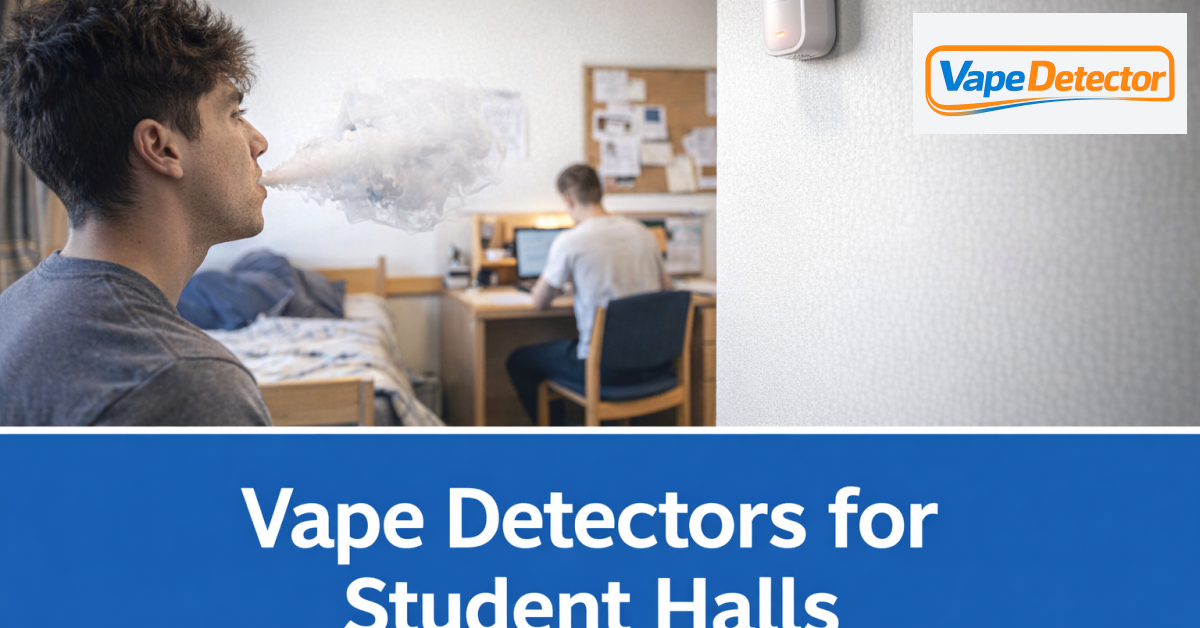
Vape Detectors for Student Halls
Vape detectors in student halls provide early alerts when vaping happens in areas where smoke-free rules apply. Student accommodation creates common risk points such as corridors, stairwells, shared kitchens, and toilets, where vapour, aerosols, and odours travel quickly. A well-specified system supports welfare, property standards, and fire safety processes without relying on constant patrols. Clear policies, sensible placement, and proportionate data handling keep detection effective and defensible.
What Vape Detectors Are And What They Detect
Vape detectors are air sensors that detect patterns associated with vaping aerosols and related air quality changes. Student halls benefit when detectors identify repeated use in communal spaces, helping staff respond before behaviours become persistent. Detection performance varies by sensor type, airflow, and nearby sources of steam or sprays, so specification needs to match real conditions.
- Vape aerosol presence and density changes
- Some particulate and VOC patterns linked to e-liquid
- Rapid air-quality shifts in enclosed spaces
- Event timestamps for audit and response
Vape detectors work best as behaviour and policy tools, not as forensic devices.
Vape Aerosol Vs Smoke And Steam
Vape aerosol consists of fine droplets that disperse and settle differently from cigarette smoke. Steam from showers and kettles creates short spikes that often look similar to aerosol events in high-humidity locations. Sensor configuration and placement reduce confusion between these sources, but no setup removes overlap completely.
Common Sensor Types Used In Vape Detection
Optical particulate sensors detect changes in airborne particle levels. VOC sensors respond to volatile compounds that may appear in e-liquids, sprays, and cleaners. Some units combine sensors and apply algorithms to reduce false alerts, especially where ventilation causes rapid dilution.
What Vape Detectors Do Not Reliably Detect
Vape detectors do not reliably identify a specific person, device, or flavour. Vape detectors do not provide courtroom-grade evidence of substance use. Performance drops in strong airflow, near open windows, or where aerosols and sprays are frequent.
Why Student Halls Need Vape Detection
Student halls need vape detection to manage repeated breaches in shared spaces where smoke-free rules apply. Communal routes and enclosed rooms allow vapour and odours to drift, affecting other residents and creating disputes. Universities and PBSA operators also face costs from cleaning, damage, and repeated callouts for avoidable incidents.
- Reduce nuisance smoke alarm activations and callouts
- Support welfare expectations in shared living areas
- Limit cleaning, repainting, and odour remediation
- Provide objective logs for proportionate enforcement
Vape detection works best alongside clear rules and consistent response.
Fire Safety And Smoke Alarm Nuisance Activations
Vaping increases the risk of nuisance activations where smoke detectors or aspirating systems respond to aerosols. Nuisance alarms disrupt residents, trigger evacuations, and create attendance fatigue. Vape detectors provide earlier, targeted alerts that help staff intervene before fire systems activate.
Resident Welfare And Indoor Air Quality
Vaping in corridors, stairwells, and toilets affects residents who avoid exposure. Odour transfer also drives complaints between flats. Vape detectors support quicker, less confrontational interventions that reduce persistent hotspots.
Property Protection And Cleaning Costs
Repeated vaping leaves residue and odours that increase deep-clean frequency. Bathrooms and bedrooms often require repainting, extractor cleaning, and fabric replacement after heavy use. Logged events help identify patterns and focus maintenance and inspections.
Policy Enforcement In Communal Areas
Student halls rely on consistent rules in shared spaces. Vape detector alerts provide time, location, and frequency, which supports proportionate action under accommodation policies. Effective enforcement also reduces peer pressure and normalisation in communal routes.
Where Vape Detectors Work Best In Student Accommodation
Vape detectors work best in enclosed, frequently used communal areas where rules apply and incidents recur. Placement decisions depend on airflow, ceiling height, and the likelihood of steam or spray interference. Hotspot mapping using complaints and incident logs improves coverage and reduces wasted devices.
- Corridors and lift lobbies with repeated complaints
- Stairwells and fire exits used for concealment
- Lounges and kitchens outside high-steam zones
- Toilets where reports are frequent
Targeting repeat locations usually delivers better outcomes than blanket coverage.
Corridors And Lift Lobbies
Corridors and lift lobbies concentrate footfall and provide quick escape routes, so vaping incidents cluster there. Air movement from doors and shafts dilutes aerosols, so detectors need careful positioning away from strong drafts. Alerts also help staff respond before vapour drifts into rooms.
Stairwells And Fire Exits
Stairwells offer privacy and are common smoking and vaping spots. Stack effect airflow pulls air upward, so locations near landings often perform better than near vents. Vandal resistance and tamper alerts matter in these less supervised areas.
Communal Kitchens And Lounges
Communal kitchens create interference from cooking aerosols and kettle steam. Lounge areas create fewer steam spikes but vary with occupancy and ventilation. Detectors suit zones where vaping is the main complaint, not directly above kettles or cookers.
Toilets And Changing Areas
Toilets and changing areas often generate reports, but showers and hand dryers increase false alert risk. Detector selection and sensitivity settings need to match humidity swings. Privacy expectations also require strict controls on what data is collected and who sees alerts.
Plant Rooms And Service Cupboards
Plant rooms and service cupboards attract concealment but include dust, fumes, and high airflow. Detectors suit cupboards near resident routes where vaping occurs, not areas with frequent chemical storage or exhaust discharge. Maintenance access also affects long-term reliability.
Choosing Vape Detectors For Student Halls
Choosing a vape detector involves balancing accuracy, false alert control, and integration needs. Student halls operate 24/7, so alert routing and staff workload matter as much as detection sensitivity. Specification also needs clear limits: what the device measures, how events are logged, and how long data stays available.
- Prioritise false alert control in high-steam buildings
- Match coverage to room volume and ventilation behaviour
- Select alerting that fits staffing and escalation
- Confirm integration and data retention options
Good procurement defines success in measurable acceptance criteria, not marketing claims. For a broader shortlist beyond student halls, see our best for accommodation providers comparison to benchmark features and operating costs.
Detection Accuracy And False Alarm Control
Accuracy depends on sensor quality, algorithms, and calibration. False alerts often come from steam, deodorants, and cleaning products. Adjustable sensitivity and multi-sensor confirmation reduce unnecessary callouts when managed with site-specific settings.
Coverage Area, Mounting Height, And Ventilation Effects
Coverage claims vary by manufacturer and depend heavily on airflow. High ceilings and strong extract ventilation dilute aerosols faster, reducing detection. Mounting location needs to avoid supply diffusers, extractor grilles, and door drafts where readings become unstable.
Alerting Options: Local Alarm Vs Silent Alert
Local alarms deter behaviour but risk confrontation and complaints. Silent alerts route events to staff for controlled response. A mixed approach suits some sites, but any audible alert needs a clear policy and signage to avoid escalation.
Integration With Fire Alarm, BMS, And Security Systems
Integration routes alerts into existing workflows, such as security control rooms or facilities helpdesks. Fire alarm integration requires careful design to avoid unintended activations and to maintain compliance with fire system rules. BMS links help correlate events with ventilation behaviour.
Data, Dashboards, And Audit Trails
Dashboards support hotspot analysis and targeted interventions. Audit trails matter when accommodation teams apply policy steps consistently. Data collection needs proportionality, with time, location, and event type often sufficient.
Power Options And Battery Management
Mains power reduces maintenance but increases installation work. Battery models speed deployment but need a documented replacement plan. Battery life varies with connectivity, signal strength, and alert frequency.
Connectivity Options In Student Halls
Connectivity affects installation cost, reliability, and response speed. Student halls often include mixed building fabric, crowded Wi‑Fi, and basement areas with weak signal. A suitable approach balances uptime with security and maintenance effort, including how devices behave during outages.
- Ethernet for stable fixed locations
- Wi‑Fi where coverage is controlled and monitored
- Cellular for difficult buildings or rapid deployment
- Store-and-forward for outage resilience
Connectivity choice also affects cybersecurity responsibilities and update delivery.
Wi-Fi, Ethernet, And Cellular Models
Wi‑Fi models depend on consistent coverage and sensible network segmentation. Ethernet models provide predictable performance and simplify power via PoE when available. Cellular models reduce reliance on building networks but add SIM management and ongoing costs.
LoRaWAN And Other Low-Power Networks
LoRaWAN suits low-bandwidth event alerts and long battery life. Coverage planning matters because thick walls and service risers affect signal. A managed network approach reduces operational overhead compared with ad hoc gateways.
Offline Operation And Store-And-Forward Events
Offline operation stores events locally when connectivity drops. Store-and-forward improves audit continuity, but it delays response during outages. Clear indicators for offline status help staff avoid assuming monitoring remains live.
Privacy, Compliance, And Resident Communications
Privacy controls shape trust and reduce complaints. Student halls operate under UK GDPR obligations where sensor data relates to identifiable residents through location and time patterns. Transparent notices, limited access, and short retention reduce risk while keeping the system effective for operational needs.
- Keep data minimal: location, time, event type
- Restrict access to named roles with logging
- Publish clear notices and policy wording
- Avoid adding microphones or cameras without strong justification
Good communications reduce disputes and increase policy compliance.
UK GDPR Considerations For Sensor Data
UK GDPR applies when logs link to individuals directly or indirectly. A lawful basis and clear purpose limit unnecessary processing. Retention periods, access controls, and documented procedures support compliance during complaints or SARs.
Signage, Notices, And Transparent Policies
Signage informs residents and visitors that detection operates in communal areas. Policies need plain language on what is detected, how alerts are handled, and what happens after repeated incidents. Consistency across residence handbooks and posters reduces confusion.
Audio Recording And Camera Pairing Risks
Audio recording increases sensitivity and risk because it captures conversations. Camera pairing also changes the privacy impact and justification threshold. Vape detection usually works without audio or video, so adding them needs a separate assessment and controls.
Managing Access To Alerts And Logs
Access management prevents informal monitoring and misuse. Role-based permissions keep alerts limited to accommodation staff, security, or facilities teams with defined duties. Logging access and changes supports accountability during investigations.
Installation And Commissioning In Student Halls
Installation quality affects performance more than headline specifications. Student halls include airflow quirks from extract fans, stairwells, and frequent door opening. Commissioning establishes baseline behaviour, confirms alert routes, and documents settings so future maintenance does not reset performance.
- Confirm airflow patterns and draft sources on site
- Avoid mounting near vents, doors, and steam sources
- Test alert routing end-to-end to the right team
- Record settings, locations, and serial numbers
A documented handover reduces recurring faults and wasted callouts.
Site Survey Checks For Airflow And Blind Spots
A site survey identifies extract points, supply diffusers, and areas where air short-circuits. Blind spots often occur in alcoves, behind soffits, or near open stair cores. Survey notes improve placement and reduce false alerts.
Positioning Rules For Ceilings, Walls, And Corners
Ceiling mounting often suits open routes, but corners trap air differently and may exaggerate readings. Wall mounting helps in narrow spaces where ceilings are high. Manufacturer spacing guidance needs adjustment for ventilation and obstructions.
Commissioning Tests And Baseline Calibration
Commissioning confirms connectivity, time synchronisation, and alert thresholds. Baseline calibration helps distinguish normal background aerosols from events, especially near kitchens and bathrooms. Documented test results support later troubleshooting.
Handover Documents And Staff Training
Handover packs need device maps, settings, and escalation contacts. Staff training focuses on interpreting alerts, handling resident interactions, and recording outcomes. Clear workflows reduce inconsistent responses and data gaps.
Operations, Maintenance, And Lifecycle Costs
Ongoing costs come from battery changes, cleaning, replacements, and staff time responding to alerts. Student halls benefit from predictable schedules that align with term dates and room inspections. A lifecycle view also includes cybersecurity maintenance and spares planning.
- Schedule periodic cleaning and functional checks
- Track batteries and replace on a defined cycle
- Apply firmware updates through controlled change
- Review alert volumes to adjust settings
Regular review keeps detection effective without increasing workload.
Cleaning, Consumables, And Sensor Drift
Dust and residue affect sensor readings over time. Sensor drift increases false alerts or missed events if left unmanaged. Cleaning regimes and periodic calibration checks maintain stable performance.
Firmware Updates And Cybersecurity Hygiene
Firmware updates address bugs and security issues. Networked sensors require secure credentials, segmented networks, and change control. Update logs support audits when incidents involve network access or data integrity.
Incident Response Workflows And Escalation
Workflows define who receives alerts, target response times, and what staff record after attendance. Escalation paths reduce repeat incidents, especially when patterns show a specific time window or location. Consistent logging supports fair enforcement.
Reporting For Facilities Teams And Accommodation Staff
Reporting helps identify hotspots, ventilation influences, and repeat issues by block or floor. Facilities teams use reports to adjust extract systems or door closers that affect airflow. Accommodation staff use reports to guide communications and inspections.
Common Problems And How To Reduce False Alerts
False alerts waste staff time and reduce confidence in the system. Student halls generate common triggers such as steam, sprays, and rapid airflow changes. A combination of placement, sensitivity tuning, and tamper resistance reduces noise without suppressing genuine events.
- Keep detectors away from showers, kettles, and hand dryers
- Avoid locations next to vents and openable windows
- Use tamper detection and robust housings
- Review alert patterns after cleaning schedules change
Trend review often identifies a single environmental cause driving most alerts.
Steam, Aerosols, And Cleaning Products
Steam spikes appear after showers, kettles, and mopping. Cleaning chemicals produce VOC bursts that mimic vaping signatures. Sensitivity adjustment and relocation away from bathrooms and janitorial cupboards reduce these triggers.
Deodorants, Sprays, And Dry Shampoo
Aerosol sprays create dense short events in toilets and corridors. Dry shampoo and body sprays often peak during mornings and evenings. Policies on spraying in communal areas reduce triggers, but detector tuning remains necessary.
HVAC Short-Circuiting And Open Windows
Supply and extract points placed too close create short-circuit airflow that bypasses the sensing area. Open windows create unpredictable dilution and backdrafts. Placement choices and ventilation checks reduce these issues.
Tampering, Obstruction, And Vandal Resistance
Residents may cover or obstruct detectors to avoid detection. Tamper switches and alerting on signal loss reduce undetected interference. Robust housings and secure fixings suit stairwells and unsupervised corridors.
Procurement Checklist For Universities And PBSA Operators
Procurement works best when requirements specify measurable performance and operational fit. Universities and PBSA operators need clarity on installation constraints, data handling, and support. Tender documents also need limits that prevent unnecessary data collection while still enabling accountability.
- Define detection goals by area type and response workflow
- Set acceptance criteria for false alert rates and uptime
- Require documented data retention and access controls
- Specify spares, warranty terms, and support hours
Clear specifications reduce change requests and inconsistent deployments.
Specification Points To Include In Tenders
Tender specifications need sensor type, connectivity, power, and integration requirements. Data fields, retention periods, and user roles need explicit definition. Environmental limits such as humidity ranges and vandal resistance also belong in scope.
Pilot Deployments And Acceptance Criteria
Pilots validate performance in real airflow and resident behaviour. Acceptance criteria need practical measures such as alert accuracy in target zones and manageable false alert volume. Pilot feedback also tests staff workflows and escalation.
Warranty, Support, And Spares
Warranty terms define replacement processes, turnaround times, and exclusions such as vandal damage. Support coverage matters during evenings and weekends in term time. A spares plan reduces downtime when devices fail.
Evidencing Performance Without Over-Collecting Data
Performance evidence often relies on event counts, locations, and response outcomes. Detailed identity tracking rarely adds value and increases privacy risk. Minimal, well-structured logs support audits without expanding data scope.
FAQs
Are Vape Detectors Legal In Student Halls In The UK?
Vape detectors are legal to use in student halls when the deployment follows applicable laws and policies, including UK GDPR where personal data processing occurs. The legal risk usually relates to transparency, proportionality, and access controls, not the presence of sensors themselves.
Do Vape Detectors Record Audio Or Video?
Most vape detectors do not record audio or video. Specifications vary by manufacturer, so procurement documents need an explicit statement of included sensors. Adding microphones or cameras changes the privacy impact and requires tighter controls.
Can Vape Detectors Differentiate Vape From Cigarette Smoke?
Some devices attempt to classify aerosol patterns, but differentiation is not reliable in all environments. Cigarette smoke, vape aerosol, and sprays overlap in particle and VOC behaviour. Operational decisions work better when based on repeated events and location patterns.
Will Vape Detectors Set Off The Building Fire Alarm?
Vape detectors typically send alerts to staff systems rather than triggering the fire alarm. Fire alarm integration requires careful design to avoid unintended activations and to maintain fire system compliance. Fire safety professionals need to approve any linkage.
How Many Vape Detectors Does A Typical Hall Need?
The number depends on layout, corridor lengths, stair cores, and hotspot history. Targeted deployment often starts with repeat-problem areas and expands after review of event logs. Manufacturer coverage claims need checking against ventilation and ceiling height.
Where Should Vape Detectors Not Be Installed?
Avoid direct placement in high-steam or high-spray zones such as inside shower rooms, directly above kettles, or next to aerosol dispenser points. Avoid mounting next to supply diffusers, extractor grilles, and frequently opened windows where airflow destabilises readings.
Conclusion
Vape detectors for student halls work best when selection, placement, and response processes match the building and resident behaviour. Clear policies, transparent resident communications, and proportionate data controls reduce friction and improve compliance. Practical commissioning and ongoing maintenance keep false alerts manageable and preserve trust in alerts. A targeted rollout focused on known hotspots often delivers faster operational benefits than blanket coverage.