
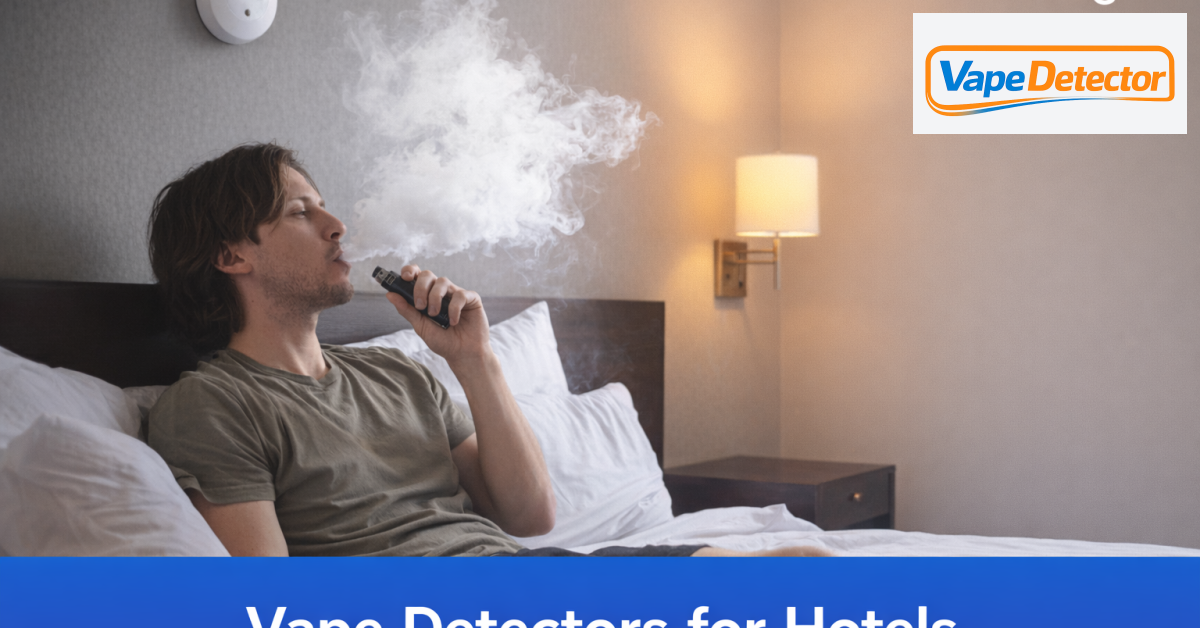
Vape Detectors for Hotels
Vape detectors for hotels provide early warning of vaping in non-smoking areas, helping protect rooms, reduce cleaning costs, and support clear house rules. Hotels often use vape detection to deter repeat incidents, speed up staff response, and create consistent evidence for charges or enforcement. Detector choice and placement affect accuracy, guest experience, and operational workload, so a structured approach matters.
What Vape Detectors Do In Hotels
Vape detectors identify aerosol events associated with vaping and trigger an alert for staff action. Hotels use alerts to intervene quickly, reduce odour and residue, and document repeated breaches across rooms or floors. Performance depends on the sensor type, airflow, and how alerts route to teams.
What A Vape Detector Is
A vape detector is a sensor device that monitors air for patterns linked to vaping aerosol and sends an alert when readings cross a set threshold.
What Vape Detectors Detect And Do Not Detect
Vape detectors detect airborne aerosol particles and related signals from vaping. Vape detectors do not confirm who vaped, identify a specific person, or provide video or audio evidence unless separate systems exist.
How Vape Detection Works In Guest Areas
Vape detection works by sampling air and applying thresholds to sensor readings. Hotels typically set actions such as notifying security, logging the event, and escalating repeat triggers.
Where Hotels Install Vape Detectors
Hotel placement focuses on locations where vaping causes the most damage, complaints, and cleaning time. Coverage planning considers door gaps, ventilation, ceiling height, and guest privacy expectations. Hotels often prioritise areas with repeat incidents and high occupancy.
Guest Bedrooms And Suites
Guest bedrooms and suites deliver the highest value for protection because incidents drive deep cleaning, odour removal, and potential room downtime.
Corridors And Lift Lobbies
Corridors and lift lobbies help detect vaping that spreads between rooms and provides a broader signal when incidents move between floors.
Toilets And Changing Areas
Toilets and changing areas need careful placement due to humidity and ventilation, plus clearer guest notices due to privacy sensitivity.
Staff Areas And Back Of House
Staff areas and back of house support internal policy compliance and reduce vaping near stores, linen, and staff welfare spaces.
Plant Rooms And High-Risk Spaces
Plant rooms and high-risk spaces benefit where aerosols affect intakes, sensitive equipment, or areas with higher fire risk.
Choosing The Right Vape Detector For A Hotel
Hotel selection balances sensitivity with manageable alert volumes and reliable evidence. Device choice also affects installation cost, cabling, and long-term maintenance. A consistent approach across room types reduces training time and improves response quality.
For a shortlist of options, see our best for accommodation providers comparison before finalising a hotel-wide standard.
Sensor Type And Detection Goals
Sensor type should match the goal: deterrence, rapid response, or audit evidence. Hotels often prioritise detectors tuned for vaping aerosol rather than general air quality.
Coverage, Sensitivity, And False Alarm Control
Coverage and sensitivity settings need alignment with room size and airflow. False alarm control matters to avoid staff desensitisation and guest disruption.
Networked Vs Standalone Detectors
Networked detectors centralise alerts and reporting across the site. Standalone detectors suit limited deployments but often increase manual checking and fragmented logs.
Alert Methods: App, Email, SMS, And On-Site Panels
Alert methods affect speed and accountability. Hotels typically route alerts to the duty manager and security, with escalation for repeat triggers.
Power Options: Mains, PoE, And Battery
Power choice drives installation scope. PoE simplifies data and power on one cable, while battery units reduce cabling but add replacement schedules.
Tamper Resistance And Discreet Design For Guest Areas
Tamper resistance reduces device interference in bedrooms. Discreet design supports guest experience while keeping the detector visible enough to deter breaches.
Integration With Hotel Systems And Workflows
Integration improves response speed and creates consistent records for disputes and charges. Hotels benefit when alerts map to real staff roles and shift patterns. Logging also supports trend analysis by floor, room type, or time of day.
Integration With Fire Alarm Systems And BMS
Integration with fire alarm systems and BMS needs clear separation of functions. Vape detectors typically provide operational alerts, not life safety signals.
Linking Alerts To Security And Duty Manager Procedures
Duty manager procedures work best when each alert has an owner, a target response time, and an escalation path for repeat events.
Logging, Reporting, And Incident Documentation
Incident documentation supports consistent enforcement. Logs normally record time, location, and severity to help justify cleaning charges or warnings.
Compliance, Privacy, And Guest Communication
Guest communication reduces complaints and supports fair enforcement. Privacy expectations vary by space, so signage and policy wording need consistency. Data handling practices also affect trust and operational risk.
Signage And Notice Wording For Detection Devices
Signage needs plain wording that states vaping detection operates in specified areas and that alerts support enforcement of non-smoking rules.
Data Handling And Retention For Alert Logs
Alert logs often contain location and time data. Retention rules should match the hotel’s purpose, complaint timelines, and any dispute process.
UK Considerations: Policies, House Rules, And Enforcement
House rules need clarity on banned behaviour, charges, and the process for disputes. Enforcement works best when staff apply the same steps across all guests.
Installation Planning And Site Survey Essentials
A site survey reduces blind spots and avoids poor placements that drive nuisance alerts. Hotels often face varied ceiling types, HVAC layouts, and room refurb histories. Planning also limits disruption to guests and housekeeping schedules.
Mapping Rooms, Ceiling Types, And Airflow
Room mapping identifies ceiling construction, vents, and dead zones. Airflow review helps prevent placing sensors directly in strong drafts or extraction paths.
Commissioning, Testing, And Acceptance Criteria
Acceptance criteria define what counts as a valid alert, how quickly alerts arrive, and how staff confirm and close incidents.
Minimising Disruption During Installation
Installation scheduling often aligns with low occupancy periods. Coordination with housekeeping reduces room access issues and rework.
Reducing Nuisance Alerts And Improving Accuracy
Accuracy depends on correct placement, stable thresholds, and awareness of hotel-specific airborne triggers. Nuisance alerts waste staff time and increase guest friction. Consistent tuning across similar rooms helps standardise outcomes.
Common Causes Of False Alerts In Hotels
Hotels see false alerts from aerosols and sprays, including deodorants and some cleaning products, plus strong airflow changes near vents.
Calibration, Thresholds, And Placement Adjustments
Threshold calibration balances detection against noise. Placement adjustments often solve repeated nuisance alerts in the same room type.
Housekeeping And Maintenance Practices That Affect Detection
Housekeeping practices affect readings when sprays disperse near sensors. Maintenance work also changes airflow patterns after filter changes or HVAC adjustments.
Maintenance, Servicing, And Total Cost Of Ownership
Ongoing cost includes cleaning, firmware updates, replacements, and staff time managing alerts. Hotels benefit from planned maintenance that fits existing safety inspection routines. Clear ownership of servicing reduces gaps after staff turnover.
Routine Checks And Firmware Updates
Routine checks confirm power, connectivity, and alert routing. Firmware updates address stability and improve detection logic where supported.
Cleaning, Replacement Cycles, And Spares
Cleaning schedules reduce sensor contamination. Spares planning limits downtime when units fail or get damaged during room turns.
Ongoing Monitoring And Support Options
Support options range from basic warranty replacement to monitored services. Monitoring reduces missed alerts when staff phones or emails fail.
FAQs
Common hotel questions focus on steam, smoke types, fire alarm interactions, sizing, and legality. Answers depend on detector model, settings, and the hotel’s chosen integration approach. Site testing provides the most reliable expectations.
Do Vape Detectors Work In Hotel Bathrooms With Steam?
Bathrooms create challenges because steam and extraction affect readings. Bathroom placements often need higher tolerance settings and careful siting away from showers and vents.
Can Vape Detectors Detect Cigarette Smoke Or Cannabis?
Many vape detectors focus on vaping aerosol patterns. Some units also react to smoke or other aerosols, but confirmation of substance type often needs separate policy and investigation steps.
Will A Vape Detector Set Off The Fire Alarm?
Vape detectors usually send operational alerts rather than triggering the fire alarm. Fire alarm interfacing requires explicit design and agreement to avoid confusion between safety and policy enforcement.
How Many Vape Detectors Does A Typical Hotel Need?
Quantity depends on room count, layout, and goals. Some hotels start with higher-risk floors or premium rooms, then expand using incident data.
Are Vape Detectors Legal To Use In UK Hotels?
UK hotels generally use vape detectors as part of house rules and property management. Legal suitability depends on transparent notice, proportionate use, and appropriate handling of any logged data.
Conclusion
Vape detectors help hotels enforce non-smoking policies with faster response and clearer records, especially in bedrooms and high-complaint areas. Accurate results rely on suitable sensor choice, careful placement, and sensible thresholds aligned with airflow and housekeeping routines. Strong workflows, clear guest communication, and planned maintenance keep detection effective without creating avoidable nuisance alerts.