
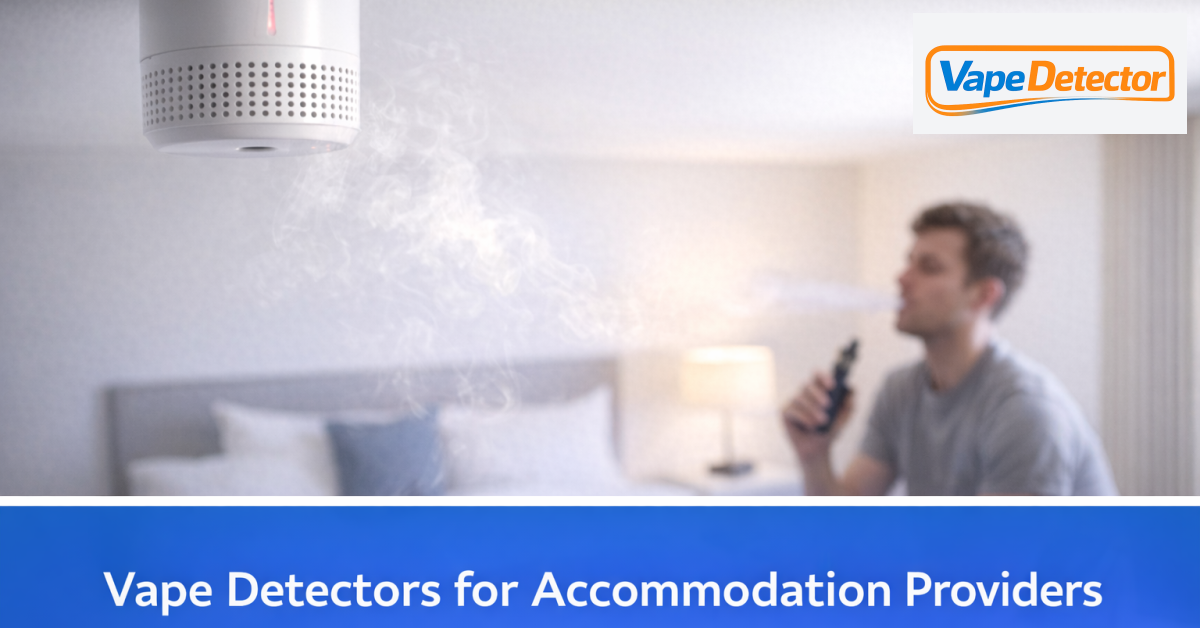
Vape Detectors for Accommodation Providers
Vape detectors help accommodation providers enforce smoke-free rules and reduce disruption from nuisance alarms. Modern devices identify airborne aerosol associated with vaping and trigger an alert for staff response. Deployment works best when detectors sit alongside clear policies, resident communication, and consistent incident handling. The right setup depends on building type, connectivity, and how teams monitor and respond.
Why Accommodation Providers Install Vape Detectors
Accommodation providers install vape detectors to manage risk, reduce operating costs, and support enforceable house rules. Decision-making often links to incident frequency, insurance requirements, and the practical limits of staff supervision across bedrooms and communal areas.
Guest Safety And Duty Of Care
Accommodation providers use vape detectors to reduce exposure to second-hand aerosol in shared buildings. Staff response improves when alerts highlight location and time, especially during overnight periods.
Protecting Property From Smoke And Vapour Damage
Accommodation providers use vape detectors to reduce residue, odour, and staining on soft furnishings and ventilation grilles. Maintenance costs rise when repeated vaping affects room condition between stays.
Supporting House Rules And Tenancy Conditions
Accommodation providers use vape detectors to evidence repeated breaches of no-smoking clauses. Incident logs support proportionate enforcement steps, including warnings and recharge processes, where permitted.
Reducing Fire Alarm Callouts And Operational Disruption
Accommodation providers use vape detectors to reduce unwanted fire alarm activations linked to vaping. Fewer evacuations protect resident confidence and reduce engineer callouts.
What A Vape Detector Is And What It Detects
A vape detector is a sensor unit that identifies airborne patterns associated with vaping and sends an alert locally or to a monitoring system. Detection performance varies by sensor type, room airflow, and how thresholds are configured.
Vape Aerosol Vs Cigarette Smoke
Vape aerosol typically forms finer particles and dissipates differently from cigarette smoke. Detectors tuned for vaping focus on aerosol signatures rather than combustion smoke cues alone.
Common Sensor Technologies Used
Manufacturers use combinations of particulate sensing, VOC sensing, and environmental measurements such as humidity. Multi-sensor approaches help separate vaping events from normal room changes.
What Vape Detectors Do Not Detect
Vape detectors do not reliably identify every substance or confirm the specific device used. Vape detectors also do not replace certified fire detection for life safety.
Where Vape Detectors Fit In Accommodation Settings
Accommodation providers place vape detectors where rule breaches create the highest cost or safety impact. Building layout, resident profile, and staff coverage shape whether devices suit bedrooms, corridors, or shared areas.
Hotels And Serviced Apartments
Hotels use vape detectors to protect room condition and reduce guest complaints. Silent alerting supports discreet handling without disturbing neighbouring rooms.
Purpose Built Student Accommodation
PBSA operators use vape detectors to manage repeated corridor and bedroom incidents. Central dashboards and audit trails support consistent enforcement across blocks. Our student halls guide breaks down suitable detector options and monitoring approaches.
HMOs And Co-Living
HMO landlords use vape detectors to manage shared ventilation and nuisance odours. Placement often prioritises communal areas where breaches affect multiple occupants.
Social Housing And Supported Accommodation
Social housing providers use vape detectors to support smoke-free communal policies. Resident communication and complaint handling procedures carry extra weight in supported settings.
Holiday Lets And Short Stays
Short-stay operators use vape detectors to reduce turnaround delays. Clear pre-arrival messaging supports fair enforcement and reduces disputes.
Placement And Coverage Planning
Placement planning focuses on capturing usable alerts while limiting false positives. The goal is reliable detection in priority spaces without creating constant notifications that staff ignore.
High Risk Locations In Buildings
High-risk locations include bedrooms with repeated breaches and enclosed corridors with limited ventilation. Communal lounges and lift lobbies also concentrate aerosol during peak times.
Room Placement Basics
Ceiling placement generally improves sampling of mixed air, away from supply vents and windows. Consistent positioning across room types supports predictable sensitivity.
Corridors, Communal Areas, And Stairwells
Corridors benefit from coverage where doors open frequently and aerosol drifts. Stairwells often need careful placement because drafts and pressure changes affect readings.
Avoiding False Alerts From Bathrooms And Kitchens
Bathrooms and kitchens create steam and aerosols that mimic vaping signatures. Placement away from showers, kettles, and extractor discharge reduces nuisance alerts.
Integrating With Existing Fire Detection Layouts
Fire detection layouts influence power, cable routes, and access for maintenance. Vape detectors need separate design decisions because enforcement alerts differ from life safety signals.
Alerts, Monitoring, And Response Workflows
Response workflows determine whether vape detection produces actionable outcomes or noise. Accommodation providers benefit from defined roles, time limits for response, and consistent record keeping.
Local Sounders Vs Silent Alerts
Local sounders deter behaviour but risk escalating conflict or disturbing neighbours. Silent alerts support discreet staff response and clearer incident escalation.
Staff Notifications And Escalation Routes
Notifications work best when they include location, timestamp, and device status. Escalation routes often move from on-duty staff to management after repeated incidents.
24/7 Monitoring Options
24/7 monitoring suits sites with limited overnight staffing. External monitoring needs clear response rules, including when to contact onsite staff or security.
Evidence, Incident Logs, And Audit Trails
Incident logs support consistent enforcement and reduce “word against word” disputes. Audit trails also help identify repeat hotspots and adjust placement or thresholds.
Network And Integration Options
Network choices affect reliability, data visibility, and ongoing costs. Accommodation providers often balance coverage across basements and stairwells against simplicity for maintenance teams.
Standalone Devices Vs Connected Systems
Standalone devices suit single properties with local response. Connected systems support multi-site oversight, remote diagnostics, and centralised incident reporting.
Wi-Fi, Cellular, And LoRaWAN Connectivity
Wi‑Fi works where coverage is stable and credentials remain controlled. Cellular suits difficult buildings but adds recurring charges, while LoRaWAN supports low-power messaging in larger estates.
Integration With BMS And Security Systems
BMS and security integration routes alerts into existing control rooms. Integration also supports unified reporting where sites already track access control and CCTV events.
Compatibility With Fire Alarm Panels
Most vape detectors operate separately from fire alarm panels. Any linkage needs clear rules to avoid unwanted evacuations and to protect fire system compliance.
Reducing False Positives And Improving Accuracy
Accuracy depends on environment, configuration, and maintenance. Accommodation providers reduce wasted staff time when devices trigger for real events rather than steam, sprays, or dust.
Environmental Factors That Trigger Alerts
Steam, aerosols from cleaning products, and sudden humidity shifts raise readings. Drafts from doors and ventilation also change concentrations and timing.
Sensitivity Settings And Thresholds
Sensitivity settings control the balance between early detection and nuisance alerts. Threshold tuning works best after reviewing real incident data from the specific building.
Maintenance Practices That Protect Performance
Routine cleaning and checks keep inlets clear and sensors stable. Fault reporting improves when staff log repeated alerts in one location for investigation.
Installation, Maintenance, And Lifecycle Costs
Costs include installation labour, connectivity, monitoring, and maintenance time. Total cost also depends on device lifespan, battery replacement cycles, and how often rooms trigger incidents.
Installation Models And Typical Constraints
Installations vary between adhesive mounts, screw fixings, and mains-powered units. Constraints include access to ceilings, working at height, and coordinating entry to occupied rooms.
Testing And Routine Maintenance Schedules
Testing schedules often align with planned inspections to reduce disruption. Routine checks focus on device status, alert function, and physical condition.
Battery Life And Power Requirements
Battery-powered units reduce wiring work but need planned replacement. Mains power reduces battery tasks but increases installation complexity.
Total Cost Of Ownership Considerations
Total cost of ownership includes downtime, false alert handling, and staff training. Multi-site operators benefit from standardised device models and spares.
UK Compliance, Privacy, And Resident Communication
UK accommodation providers need clear policies and proportionate handling of alerts. Privacy expectations increase in bedrooms, so communication and data handling rules need careful design.
Smoke-Free Policies And Contract Terms
Tenancy agreements and house rules set the basis for enforcement. Clear wording on prohibited behaviour and consequences reduces disputes.
Data Protection And Privacy Principles
Data handling needs a defined purpose, limited access, and retention controls. Location and timestamp data still counts as personal data when linked to an individual.
Signage And Resident Notifications
Signage and welcome packs reduce surprise and improve compliance. Notifications work best when they explain what the device detects and how alerts are used.
Handling Complaints And Disputes
Complaints handling needs a documented process and consistent outcomes. Incident records support fair review where residents challenge accuracy or staff conduct.
Choosing Vape Detectors For Accommodation Providers
Procurement works best when technical fit and operational fit receive equal weight. Specification checks need to match the building environment, while procurement checks need to match how teams monitor, maintain, and evidence incidents.
Key Specification Checks
Key checks reduce unsuitable purchases:
- Sensor type and stated detection scope
- Alert types and reporting detail
- Power method and battery replacement process
- Environmental operating range
Specification alignment reduces false alerts and avoids gaps in coverage. To narrow down options by building type and monitoring needs, use our comparisons and best for guide before finalising a shortlist.
Procurement Checks For Multi-Site Operators
Multi-site operators need consistency across estates. Central management, remote diagnostics, and standard installation methods reduce training and support overhead.
Supplier Support And Warranty Checks
Supplier support affects uptime and credibility of incident data. Warranty terms, replacement lead times, and access to firmware updates shape long-term reliability.
FAQs
Common questions focus on privacy, fire system behaviour, detection speed, and maintenance workload. Clear answers help residents, staff, and procurement teams align expectations before installation.
Do Vape Detectors Record Audio Or Video?
Most vape detectors use environmental sensors and do not record audio or video. Product specifications confirm exactly what data the device collects and transmits.
Do Vape Detectors Set Off Fire Alarms Automatically?
Most vape detectors send enforcement alerts rather than triggering evacuation alarms. Any connection to a fire alarm system needs explicit design and approval to avoid unwanted activations.
How Quickly Do Vape Detectors Detect Vaping?
Detection speed varies by room size, airflow, and device thresholds. Alerts often arrive faster in small rooms with limited ventilation and slower in drafty corridors.
Are Vape Detectors Suitable For Bedrooms?
Bedrooms suit vape detectors where policies require smoke-free sleeping areas and privacy communication is strong. Silent alerts and clear signage reduce conflict and confusion.
How Often Do Vape Detectors Need Maintenance?
Maintenance frequency depends on sensor design, room conditions, and power type. Routine checks often align with planned inspections, with battery replacement on the manufacturer schedule.
Conclusion
Vape detectors support smoke-free accommodation by providing timely alerts, consistent records, and clearer response workflows. Effective use depends on correct placement, reliable connectivity, and practical staff processes that limit false positives. UK providers also need clear contract terms, proportionate enforcement, and privacy-led communication, especially where detectors operate in bedrooms and shared living spaces.