
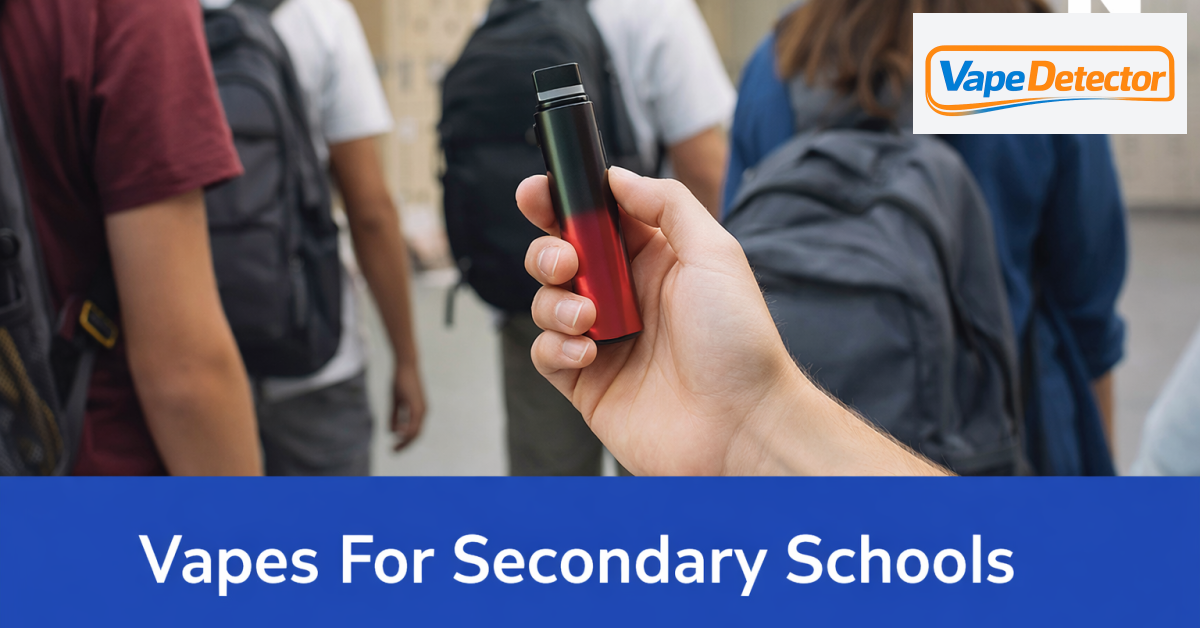
Secondary Schools
Secondary schools manage vaping as a behaviour, safeguarding, and site safety issue. Incidents range from occasional experimentation to frequent use in toilets and corridors, and often involve disposable devices. Staff need clear definitions, consistent responses, and practical controls that respect privacy. Vape detectors and sensors add monitoring in high-risk areas, but they work best alongside policy, education, and parental engagement.
What “Vapes In Secondary Schools” Means In Practice
Vaping in secondary schools includes possession, use, supply, and concealment of vaping devices and liquids on site or on school activities. The day-to-day reality often involves pupils using small disposables in enclosed areas, swapping devices, or claiming products are “nicotine-free” to reduce consequences. Clear terminology and a shared view of what counts as an incident help staff act consistently and record patterns accurately.
Common incident patterns include covert use during breaks, group use in toilets, and devices hidden in bags, pencil cases, or clothing. Practical handling also covers confiscation, disposal, and safeguarding steps when there are signs of supply, coercion, or substances beyond nicotine.
Vapes, E-Cigarettes, And Nicotine Products: Key Definitions
E-cigarettes are battery-powered devices that heat liquid to create vapour. Nicotine products include nicotine-containing e-liquids and nicotine-free liquids that still enable vaping behaviour.
Legal Vs Illegal Products In The UK
UK law controls age of sale and product standards. Illegal products often involve underage supply, oversized nicotine-free claims masking nicotine, or non-compliant imports.
Typical Places And Times Incidents Occur In Schools
Toilets, changing rooms, stairwells, and secluded corridors see the highest risk. Lunchtimes, breaks, and lesson transitions create the most opportunity.
UK Rules And School Responsibilities
UK schools balance legal duties with behaviour management and safeguarding. Age-of-sale rules shape when incidents become potential offences, while school policies set expectations for pupils and staff actions. Schools also need processes that protect privacy, especially in toilets and changing rooms, while still addressing repeated use and suspected supply.
A workable approach combines a clear behaviour policy, consistent recording, and proportionate responses. Decisions often turn on whether the incident involves possession, use, supply, or suspected illicit substances, and whether vulnerability or exploitation concerns exist.
For a broader view of settings beyond schools, see where vape detectors are used across different environments.
Age-Of-Sale And Supply Offences
The age of sale for vapes is 18. Supplying to under-18s can involve criminal offences, particularly where there is intent, repeated supply, or organised distribution.
School Behaviour Policies And Confiscation Rules
School policies usually permit confiscation of prohibited items. Staff need a defined process for securing items, documenting details, and deciding disposal or handover routes.
Safeguarding, Welfare, And Duty Of Care
Safeguarding applies where vaping links to coercion, exploitation, or health risk. Vulnerable pupils often need support routes alongside sanctions.
Searches, Screening, And Privacy Considerations
Search powers and privacy expectations require careful handling. Monitoring in sensitive areas needs privacy-safe methods and clear communication to pupils and parents.
Why Vaping Is A Problem In Secondary Schools
Vaping creates health, behaviour, and safety risks that schools manage daily. Nicotine exposure increases addiction risk in young people and can drive persistent rule-breaking and covert behaviour. Even when nicotine is disputed, the pattern of concealment undermines behaviour standards and can normalise substance use among peer groups.
Operational impacts include supervision pressure, damage to facilities, and repeated incidents in toilets and corridors. Safety risks also increase when devices are tampered with, charged unsafely, or disposed of improperly.
Health And Addiction Risks For Young People
Nicotine use increases dependence risk and can affect concentration and mood. High-strength liquids raise the likelihood of adverse effects from frequent use.
Behaviour, Attendance, And Learning Impacts
Repeated vaping incidents disrupt lessons and encourage truancy hotspots. Time out of class increases when staff investigate, supervise, and manage follow-up.
Site Safety Risks: Fire, Batteries, And Tampering
Lithium batteries pose fire risk when damaged or charged with unsuitable equipment. Tampering with devices and disposing of them in bins or toilets increases hazard.
Social Dynamics: Peer Pressure And Covert Use
Peer influence drives experimentation and sharing. Covert use and “challenge” behaviour can spread quickly within year groups.
Common Vape Products And What Staff See
Staff encounters vary from simple disposables to refillable devices and liquids with unclear labelling. Product variety affects detection, confiscation, and risk assessment, especially where liquids claim to be nicotine-free or involve unfamiliar cannabinoids. Knowing common formats helps staff recognise concealment methods and identify when a product looks non-compliant or higher risk.
Schools also see accessories such as spare pods, chargers, and small bottles of e-liquid. Packaging is often absent, which makes it harder to verify contents and strength without treating claims as unconfirmed.
Disposable Vapes And Concealment Issues
Disposables are small and easy to hide. Bright designs and sweet scents increase appeal and make group use more common.
Refillable Devices, Pods, And E-Liquids
Pod systems and refillables involve separate cartridges and liquids. Spare pods and bottles raise the likelihood of on-site refilling and sharing.
Nicotine Salts, High-Strength Liquids, And Labelling
Nicotine salts deliver nicotine efficiently and often feel smoother. Poor labelling and missing packaging increase uncertainty about strength and compliance.
THC, CBD, And “Spice” Claims: What Schools Need To Know
Claims about THC, CBD, or “Spice” require caution because contents are not confirmed by appearance alone. Escalation routes matter when intoxication, supply, or safeguarding concerns appear.
Signs Of Vaping In School Settings
Vaping indicators include changes in behaviour, environmental clues, and patterns around specific locations. Staff observations matter most when recorded consistently, because repeated low-level signs often build a clearer picture than a single report. Physical indicators are not proof on their own, but they guide proportionate supervision and follow-up.
Environmental signs often appear where pupils congregate briefly and where ventilation is limited. Toilets and changing rooms present added complexity because staff presence is restricted by privacy expectations.
Pupil Behaviour And Physical Indicators
Frequent toilet trips, group clustering, and concealment behaviours are common. Coughing, headaches, and irritability may appear but need cautious interpretation.
Smell, Vapour Residue, And Environmental Clues
Sweet scents, aerosol haze, and residue near vents or cubicles can indicate recent use. Air fresheners and deodorant sprays often appear alongside covert vaping.
High-Risk Locations: Toilets, Stairwells, And Changing Rooms
Toilets and stairwells support short, hidden use. Changing rooms raise safeguarding sensitivity, so response plans need privacy-safe controls.
Detection And Monitoring Options For Schools
Vape detection supports staff by identifying likely vaping events in targeted areas, especially toilets. Sensors do not replace supervision or behaviour systems, but they reduce reliance on chance discovery and help schools respond quickly and consistently. Decisions depend on what the detector measures, how alerts are handled, and how the school records outcomes.
False alarms and calibration settings affect trust in the system. Evidence handling also matters because schools need defensible records without creating excessive data collection or privacy concerns.
What A Vape Detector Is And What It Detects
A vape detector is a sensor that identifies airborne particles and related signals linked to vaping aerosol. Some models also detect tampering, noise levels, or air-quality changes, depending on specification.
How Vape Sensors Work In Toilets And Enclosed Areas
Sensors sample air continuously and trigger when readings cross a threshold. Enclosed spaces produce clearer signals because vapour disperses more slowly.
Sensitivity, False Alarms, And Calibration Considerations
Sensitivity settings balance missed events against nuisance alerts. Aerosols from deodorant, steam, or cleaning products can trigger alarms if calibration is poor.
Alerts, Reporting, And Evidence Handling
Alerts route to nominated staff by email, app, or site systems. Incident logs need times, locations, actions taken, and outcomes to support trend review.
Where To Install Vape Detectors In Secondary Schools
Detector placement aims to cover hotspots while protecting privacy and avoiding blanket surveillance. Toilets and changing rooms often produce the highest incident volume, but installation needs careful positioning and clear boundaries. Corridors and stairwells also benefit where supervision gaps exist and where patterns show repeated use.
Site surveys reduce wasted spend by checking airflow, power, connectivity, and tamper risk. Signage supports deterrence when wording focuses on safety and behaviour expectations rather than accusation.
Toilets And Changing Rooms: Privacy-Safe Approaches
Privacy-safe approaches avoid cameras and focus on air monitoring in communal areas. Changing rooms often need stricter access controls and safeguarding oversight.
Corridors, Stairwells, And Other Hotspots
Stairwells and secluded corridors suit detectors where incidents cluster. Placement works best near repeated congregation points rather than wide open spaces.
Site Surveys And Placement Checks
Site surveys confirm mounting height, ventilation effects, and signal strength. Placement checks also consider cleaning routines and vandalism risk.
Signage And Deterrence Without Stigmatising Pupils
Signage sets expectations and explains monitoring. Neutral wording reduces stigma and supports consistent enforcement across year groups.
Responding To Incidents: A Consistent Process
A consistent process reduces arguments, improves safeguarding outcomes, and supports fair behaviour management. Staff actions need to be predictable: immediate safety, secure the item, record facts, and apply policy steps. Escalation decisions depend on suspected supply, repeated incidents, or signs of harm.
Record quality matters because repeat incidents often involve multiple staff and locations. Chain of custody is important when items are passed to senior staff, parents, or external agencies.
Immediate Actions For Staff
Staff actions prioritise safety and supervision. Staff also separate pupils if needed and seek senior support where supply or aggression is suspected.
Confiscation, Recording, And Chain Of Custody
Confiscation needs a named holder, labelled storage, and a clear record of time and location. Chain of custody reduces disputes over what was taken and from whom.
When To Involve Parents, Police, Or Local Authorities
Parental involvement often applies to first incidents and repeat patterns. Police or local authority involvement is more likely where supply, exploitation, or suspected controlled substances appear.
Supporting Pupils: Education, Cessation, And Referrals
Support routes include education, brief interventions, and referrals to health or safeguarding teams. Repeat incidents often respond better when underlying needs are addressed alongside sanctions.
Preventing Vaping In Secondary Schools
Prevention works when policy, education, and consistent supervision align. Clear rules reduce “grey areas”, and targeted education addresses misinformation about nicotine, legality, and health effects. Parent and carer involvement strengthens boundaries beyond the school gate.
Repeat incidents often indicate social pressure, stress, or wider safeguarding concerns. A prevention plan needs a route for early help, plus a clear response when behaviour escalates to supply or intimidation.
Policy Wording That Staff And Pupils Understand
Policy wording needs plain definitions of possession, use, and supply. Consequences and escalation steps need to be specific and consistently applied.
Curriculum, Assemblies, And Targeted Education
Curriculum content works best when it addresses real products and peer scenarios. Targeted sessions support year groups or pupils where incidents cluster.
Parent And Carer Engagement
Parent contact works best when it explains the policy and the risks clearly. Consistent messaging reduces disputes about “nicotine-free” claims and responsibility.
Managing Repeat Incidents And Vulnerable Pupils
Repeat cases benefit from a structured plan that includes safeguarding review. Vulnerability indicators require coordinated action between pastoral teams and external services.
Procurement And Budget Considerations For Schools
Procurement decisions focus on total cost, reliability, privacy controls, and ongoing support. Buying and leasing affect cashflow and maintenance responsibility, while installation requirements affect whether a project is realistic within term-time constraints. Data handling and access control also matter because alerts and logs often contain personal data.
Impact measurement helps justify spend and refine placement. Schools get more value when incident logs link sensor alerts to outcomes and when reviews lead to practical adjustments.
Buying Vs Leasing: Typical Cost Drivers
Cost drivers include sensor count, alert options, warranty, and support. Leasing often bundles maintenance, while buying places responsibility on the school or installer.
Installation Requirements And Ongoing Maintenance
Installation needs power, mounting, and reliable connectivity. Maintenance includes cleaning, calibration checks, and tamper inspection.
Data Handling, Security, And Access Controls
Access controls restrict alerts and logs to authorised staff. Data retention rules need to match safeguarding needs and school policies.
Measuring Impact: Incident Logs And Trend Reviews
Incident logs track location, time, and outcome. Trend reviews support changes to supervision, education, and detector placement.
FAQs
FAQs support quick clarity on legality, search powers, privacy, detection limits, and practical roll-out. Answers depend on school policy, UK law, and the specific detector specification. Schools benefit from confirming settings, alert pathways, and recording practices before relying on sensor data for decision-making.
Are Vapes Illegal In Secondary Schools In The UK?
Vapes are not illegal items for adults, but schools usually prohibit possession and use on site under behaviour policies. Under-18 possession often links to illegal supply, but school rules apply regardless of criminal thresholds.
Can A School Search A Pupil For A Vape?
School staff have defined powers to search in certain circumstances, subject to school policy and legal safeguards. Schools use proportionate actions, record decisions, and involve senior staff where needed.
Do Vape Detectors Record Audio Or Video?
Most vape detectors focus on air monitoring and alerts, not recording. A school needs to confirm the specification because some devices include additional sensors that are not audio or video.
Do Vape Sensors Detect Nicotine, THC, Or Both?
Vape sensors detect aerosol signals, not the substance label. Sensors do not confirm nicotine or THC content without additional testing, so schools treat substance claims as unverified.
Where Should A Secondary School Install Vape Detectors First?
Toilets usually rank first because incidents cluster there and vapour detection works well in enclosed spaces. Schools often prioritise blocks with repeated reports or safeguarding concerns.
How Does A School Reduce False Alarms From Vape Sensors?
False alarms reduce with suitable placement, calibration, and clear thresholds. Schools also review alerts against supervision logs to identify triggers such as cleaning aerosols or steam.
Conclusion
Secondary schools address vaping through clear rules, safeguarding-aware responses, and practical controls in known hotspots. Vape detectors support faster identification of incidents in privacy-sensitive areas when settings, alert handling, and recording are well managed. Prevention improves when policy language is clear, education matches real behaviours, and parents receive consistent information. Procurement choices work best when schools plan for installation, maintenance, and secure data handling from the start.