
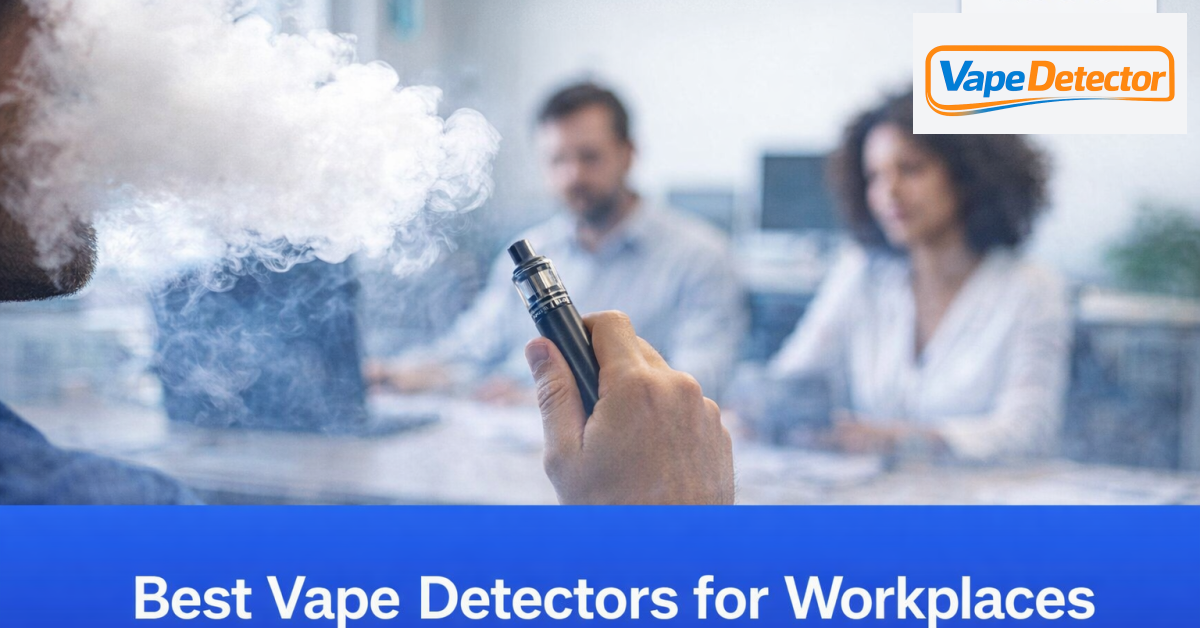
Best for Workplaces
Workplace vape detectors and sensors reduce vaping in restricted areas, speed up staff response, and support consistent incident handling. Selection depends on risk level, building layout, privacy requirements, and how alerts fit existing security and facilities processes. Effective deployments focus on coverage where incidents occur most, with clear policies and proportionate monitoring.
What “Best For Workplaces” Means For Vape Detectors And Sensors
“Best for workplaces” means a setup that matches site risks, limits disruption, and produces usable alerts and records for managers and security. Workplace priorities often differ from schools, with greater focus on staff welfare, safety-critical areas, and integration with existing building systems.
Workplace Use Cases And Risk Profiles
Offices often target toilets and stairwells, while industrial sites prioritise flammable-risk areas and policy compliance. Healthcare and public-facing facilities add safeguarding and visitor management needs.
Typical Coverage Areas And Blind Spots
Toilets, changing rooms, and stairwells often generate incidents, but cubicles, high ceilings, and strong extraction create blind spots. Large open volumes dilute aerosols and reduce sensitivity.
Common Outcomes: Deterrence, Evidence, And Faster Response
Deterrence comes from visible controls and consistent follow-up. Evidence usually means time-stamped alerts and location data, not identification. Faster response depends on reliable routing to the right staff.
Workplace Requirements And Compliance Considerations
Workplace deployments need clear governance, because sensors affect privacy expectations and disciplinary processes. UK employers also need defensible reasons for placement, data handling, and access to alerts or logs.
- Document the lawful basis for processing and retention periods
- Use signage where monitoring occurs and explain what is collected
- Limit access to logs and define incident-handling steps
- Align sensor use with HR processes and health and safety duties
Clear compliance steps reduce disputes and keep monitoring proportionate. Workplace priorities often differ from schools, with greater focus on staff welfare, safety-critical areas, and integration with existing building systems.
Safeguarding And Duty Of Care
Health and safety policies often drive deployments in fire-risk or oxygen-use environments. Duty of care also covers staff exposure to aerosols and conflict management during interventions.
Privacy, Data Protection, And Signage
Privacy impact assessments help justify placement in sensitive areas like toilets. Signage and staff communications reduce misunderstanding and support transparency.
Policies For Searches, Discipline, And Incident Handling
Policies define when staff attend, what evidence counts, and how reports enter HR casework. Proportionate escalation reduces inconsistent treatment across shifts.
Sensor Types And Detection Capabilities
Workplace products vary by sensing method, which affects sensitivity, false alarms, and where units work best. Understanding sensor capability avoids buying a unit that cannot deliver reliable alerts in the target space.
Vape Aerosol (Particulate) Sensors
Particulate sensors look for aerosol signatures associated with vaping. Performance depends on airflow, ceiling height, and distance from the source.
VOC And Air-Quality Sensors
VOC sensors react to changes in airborne chemicals and odours. VOC readings help with broader air-quality monitoring but can be less specific in busy environments.
Multi-Sensor Units And When They Fit
Multi-sensor units combine signals to improve confidence and reduce nuisance alerts. Multi-sensor devices suit mixed-use sites where deodorants, steam, and cleaning products are common.
What Vape Detectors Do Not Detect Reliably
Vape detectors do not reliably identify individuals or confirm substance type. Detectors also struggle with high extraction, open bays, and sources that mimic aerosols.
Installation And Placement For Workplace Sites
Placement drives results more than headline specifications. Workplace layouts often mix small high-risk rooms and large volumes, so planning needs zoning, airflow awareness, and realistic expectations on coverage.
- Fit units near likely use points, not just central ceilings
- Avoid direct extraction vents and high turbulence locations
- Treat large areas as multiple zones, not one detector area
- Verify placement with on-site testing under normal ventilation
Site-specific placement reduces missed incidents and unnecessary call-outs.
Toilets, Changing Rooms, And High-Risk Areas
Toilets and changing rooms need careful positioning for detection while respecting privacy. Corridors outside sensitive rooms often provide a practical alternative where appropriate.
Corridors, Stairwells, And Communal Spaces
Stairwells concentrate incidents but airflow varies by door openings and stack effect. Corridors work best when used to detect movement patterns and repeat locations.
Warehouses, Loading Bays, And Large-Volume Areas
Warehouses dilute aerosols quickly and have strong air movement. Better results come from targeting welfare areas, enclosed rooms, and pinch points.
Environmental Factors That Affect Performance
Extraction rates, temperature changes, dust, and aerosols from work processes influence sensor behaviour. Commissioning needs testing during typical operating conditions.
Alerts, Integrations, And Response Workflows
Alerting only works when messages reach the right person fast and create a consistent action. Workplace sites often need integrations with CCTV, access control, or facilities systems for verification and reporting.
Real-Time Alerts: SMS, Email, And App Notifications
SMS suits rapid notification but needs robust contact management. Apps support acknowledgement and escalation, which helps shift teams track ownership.
Integration With CCTV, Access Control, And BMS
CCTV bookmarking aids verification without expanding surveillance beyond policy. Access control and BMS integrations support location context and maintenance monitoring.
Escalation Rules, Shift Patterns, And Audit Trails
Escalation rules route alerts by time of day and zone. Audit trails record acknowledgements and outcomes, supporting HR and health and safety reporting.
Choosing The Right Setup By Workplace Type
Workplace type affects both risk and what “good” looks like operationally. Matching devices, placement, and workflows to the site reduces gaps and avoids over-monitoring.
- Offices: focus on toilets, stairwells, and discrete alerting
- Industrial sites: prioritise fire risk zones and robust housing
- Retail back-of-house: target staff areas with high footfall
- Healthcare: align response with safeguarding and visitor flows
A workplace-specific approach delivers consistent coverage without unnecessary sensors.
Offices And Co-Working Spaces
Office deployments usually aim for policy compliance and neighbour relations. Shared buildings benefit from clear demarcation of monitored areas and response ownership.
Factories, Warehouses, And Logistics Sites
Industrial sites need resilience against dust and vibration, plus realistic zoning in large spaces. Response planning often links to safety teams rather than HR alone.
Retail Back-Of-House And Shopping Centres
Back-of-house areas combine steam, aerosols, and cleaning products, increasing false alarm risk. Clear thresholds and verification steps reduce disruption.
Healthcare, Care Homes, And Public-Facing Facilities
Healthcare settings prioritise safeguarding, patient comfort, and infection-control routines. Monitoring needs strict access controls and tight retention periods.
Education Sites Used As Workplaces
Sites with mixed staff and student presence often apply workplace governance alongside safeguarding. Clear division of responsibilities avoids confusion during incidents.
Cost, Ownership, And Procurement Basics
Costs depend on device count, connectivity, software, and support terms. Procurement works best when it includes commissioning, acceptance testing, and ongoing ownership tasks.
Upfront Vs Subscription Pricing Models
Upfront pricing shifts cost to purchase and installation. Subscription models often bundle software, alerting, and support, but require clarity on term length and renewal.
Ongoing Maintenance And Calibration
Maintenance covers cleaning, functional testing, firmware updates, and sensor health checks. Calibration needs depend on sensor type and environmental exposure.
Rollout Phases: Pilot, Expansion, And Standardisation
Pilots prove placement and thresholds in real conditions. Expansion benefits from standard zone naming, response roles, and consistent reporting.
Reducing False Alarms And Improving Reliability
False alarms undermine response and trust. Reliability improves when settings reflect the environment, and when teams review alert patterns against cleaning schedules and occupancy.
- Identify recurring triggers such as steam, aerosols, and sprays
- Tune sensitivity per zone rather than using one global setting
- Use verification steps before escalation to disciplinary action
- Review alerts monthly and adjust placement or thresholds
A controlled tuning cycle reduces nuisance alerts without losing meaningful detection.
Common False Alarm Sources
Steam from showers and kettles, deodorants, and cleaning chemicals frequently trigger sensors. Dust and aerosols from work processes also create noise in industrial sites.
Sensitivity Settings And Threshold Tuning
Threshold tuning balances missed detections against nuisance alerts. Zone-based settings work better than one-size-fits-all across a mixed building.
Testing, Acceptance Criteria, And Ongoing Review
Acceptance criteria define what counts as a valid alert rate and response time. Ongoing review uses alert logs to spot drift and new environmental changes.
Vendor And Product Evaluation Checklist
Evaluation needs more than brochure range claims. Workplace buyers benefit from evidence on performance in similar environments, plus clear IT and support requirements. For a quicker shortlist, use our comparisons and best for guide to compare options by environment and priorities before requesting trials.
Detection Performance And Independent Testing
Independent testing helps compare devices under controlled conditions. On-site trials remain necessary because ventilation and room geometry vary widely.
Coverage Claims And Real-World Constraints
Coverage claims often assume ideal airflow and ceiling heights. Real-world constraints include extraction, open doors, and partitioned rooms.
Support, Warranty, And SLA Terms
Support terms define response times, replacement processes, and software updates. Warranty exclusions often include misuse, water ingress, and unapproved installation.
Cybersecurity And Network Requirements
Networked sensors need secure authentication and update processes. IT teams often require VLAN segregation, inbound connection rules, and logging.
FAQs
Where Should Vape Detectors Be Installed In Workplaces?
Toilets, changing rooms, stairwells, and welfare areas usually deliver the highest value. Placement works best when aligned to airflow and verified through commissioning tests.
Do Vape Detectors Record Audio Or Video?
Most vape detectors do not record audio or video. CCTV integration usually links an alert to an existing camera system rather than adding new recording inside sensitive spaces.
Can Vape Detectors Differentiate Between Vaping And Deodorant Or Steam?
Some units use multi-sensor logic to improve confidence, but perfect differentiation is not realistic in all environments. Threshold tuning and placement reduce common triggers.
What Policies Should Accompany Vape Detector Installation?
Workplaces need policies covering purpose, monitored areas, signage, data access, retention, and incident steps. HR and health and safety alignment reduces inconsistent enforcement.
How Often Do Workplace Vape Sensors Need Maintenance?
Maintenance frequency depends on sensor type and environment. Dusty or high-humidity areas often need more frequent checks, with scheduled functional testing and firmware updates.
Conclusion
Workplace vape detection works best when sensor type, placement, and response processes match real site conditions. Compliance steps, privacy controls, and clear HR handling keep monitoring proportionate and defensible. Reliable outcomes come from commissioning, tuning, and regular review rather than relying on range claims alone.