
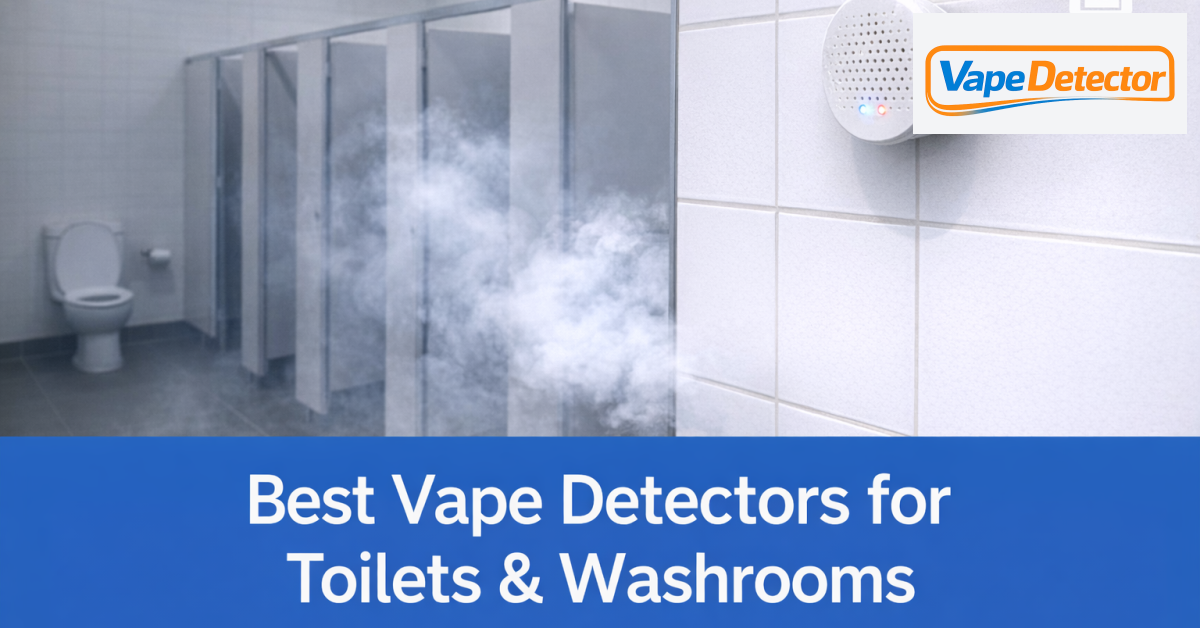
Best for Toilets & Washrooms
Toilets and washrooms create difficult conditions for vape detection. High humidity, frequent aerosols from hygiene products, and short dwell times increase both missed detections and false alerts. A suitable setup focuses on resilient sensors, sensible placement, and alerting that supports staff response without creating disruption. UK sites also need installation choices that fit electrical safety expectations in wet areas and align with safeguarding and privacy requirements.
What Makes Toilets And Washrooms High-Risk Areas For Vaping
Washrooms combine privacy with predictable breaks, so vaping attempts cluster at peak times and in low-supervision zones. Airflow changes quickly when doors open, extract fans cycle, and hand dryers run, which disperses aerosol unevenly and affects how quickly sensors register a trigger. Risk also varies by layout, with enclosed cubicles trapping aerosol while larger shared areas dilute it.
Typical Aerosol Sources In Washrooms
Washrooms contain aerosols from vaping, deodoriser sprays, cleaning products, and steam. Mixed sources complicate interpretation when detection relies on particulate patterns.
Ventilation Patterns That Affect Detection
Extract fans, open vents, and door gaps move aerosol away from sensors. Strong extraction can reduce dwell time near the detector and delay alarms.
Privacy, Footfall, And Peak-Time Triggers
Break times, lesson changes, and event intervals increase attempts. Privacy and noise cover also reduce the perceived risk of being challenged.
Vape Detector Features That Matter Most In Toilets And Washrooms
Washroom performance depends on fast, stable sensing under humidity swings and short exposure windows. Alarm behaviour matters as much as detection because noisy alerts can create confrontation or disruption in busy sites. Hardware also needs to resist tampering and survive frequent cleaning.
- Sensitivity with adjustable thresholds to reduce humidity-related triggers
- Fast response with clear “trigger, alert, reset” behaviour
- Sealed or protected design for steam, splashes, and cleaning regimes
- Tamper detection and robust fixings for anti-vandal locations
Sensor Sensitivity And Detection Thresholds
Adjustable thresholds help match each washroom’s baseline aerosol level. Stable sensitivity reduces “alert fatigue” and preserves trust in alarms.
Fast Response And Clear Alarm Behaviour
Fast detection suits short cubicle use. Clear reset rules avoid repeated alerts from residual aerosol after an incident.
Humidity And Steam Resilience
Humidity resilience reduces nuisance alerts during hot water use and after cleaning. Conformal coating and protected inlets support reliability.
Tamper Resistance And Anti-Vandal Design
Tamper switches, secure screws, and strong housings reduce interference. Visible damage indicators support quicker fault reporting.
Battery Versus Mains Power In Wet Areas
Battery units avoid wiring complexity in some locations. Mains power supports continuous monitoring where safe installation and protected circuits exist.
Placement And Coverage For Toilets And Washrooms
Placement needs to balance capture of cubicle aerosol with avoidance of high-noise aerosol sources like hand dryers and sprays. Coverage planning starts from airflow and compartmentation, not just floor area. A practical approach uses test triggers and adjusts positions to reduce blind spots.
- Mount away from hand dryers, sinks, and direct extractor поток paths
- Prioritise positions near cubicle exits or shared circulation zones
- Use extra units where walls and cubicles block airflow
- Validate with site-specific testing during normal use patterns
Best Mounting Heights And Positions
Higher mounting often reduces direct spray exposure and tampering. Final height depends on sensor design and how air moves across the ceiling line.
Stalls, Cubicles, And Multi-Compartment Layouts
Cubicles trap aerosol, but doors release it in bursts. Multi-compartment layouts often need more than one detector to avoid isolated pockets.
Avoiding False Alerts From Hand Dryers And Deodoriser Sprays
Hand dryers lift particles and change airflow rapidly. Deodorisers produce strong aerosols, so distance and airflow separation reduce triggers.
Using Multiple Detectors For Larger Washrooms
Multiple detectors improve localisation and reduce “one alarm for the whole block” disruption. Zoning also helps identify repeat hotspots.
Managing False Positives In Washroom Environments
False positives waste staff time and reduce confidence in enforcement. Washrooms contain steam, sprays, and chemical aerosols that look similar to vaping signals if filtering is weak. A workable approach combines calibration, delays, and realistic testing during cleaning and peak use.
Steam, Aerosols, And Cleaning Chemicals
Steam from hot water and aerosols from sprays create short spikes. Cleaning chemicals can linger and raise background levels after scheduled cleans.
Calibration, Time Delays, And Alert Filtering
Time delays reduce brief spikes from sprays. Alert filtering that requires sustained readings helps separate vaping from transient aerosols.
Testing With Realistic Washroom Scenarios
Testing during hand dryer use, deodoriser application, and post-clean humidity exposes weak setups. Repeat tests confirm changes after ventilation adjustments.
Alerting, Monitoring, And Evidence Handling
Alerting needs to support quick response without escalating incidents in sensitive areas. Monitoring choices affect who receives alerts, how fast they act, and what information gets retained. Evidence handling focuses on logs and procedures rather than intrusive surveillance.
Local Sounders Versus Silent Alerts
Local sounders deter but risk disruption and misuse. Silent alerts support discreet staff response in schools, healthcare, and workplaces.
Linking To Staff Radios, Apps, Or Building Systems
Radio or app alerts shorten response time and support escalation paths. Building system links centralise monitoring where estates teams manage multiple sites.
Privacy Considerations And Signage In Washrooms
Washrooms require careful safeguarding decisions and clear communication. Signage that states vaping detection operates supports transparency without collecting personal data.
Event Logs And What They Typically Record
Event logs usually store time, device ID, alert type, and tamper or fault events. Logs support trend analysis and maintenance without recording audio or video.
Installation And Compliance Considerations In The UK
UK installation decisions need to reflect electrical safety in wet environments, internal policies, and any data protection obligations for connected devices. Alarm design also needs to avoid confusion with fire alarms and follow site procedures for response and escalation. Documentation helps demonstrate due diligence during audits and incident reviews.
Electrical And Safety Considerations In Wet Areas
Wet-area work requires competent installation and suitable ingress protection. Location relative to water sources and cleaning methods affects enclosure choice.
Fire Alarm Integration Versus Standalone Alerts
Standalone alerts avoid confusion with life-safety systems. Fire alarm integration needs careful design to prevent false evacuations and meet site rules.
School, Hospital, And Workplace Policy Alignment
School policies often focus on safeguarding and behaviour response. Hospitals and workplaces often prioritise discreet alerts and incident logging.
Data Protection Basics For Connected Devices
Connected devices process operational data such as alert times and locations. Access controls and retention periods reduce unnecessary exposure of logs.
Recommended Setups By Washroom Type
Washroom type shapes the right balance between deterrence, discretion, and operational overhead. Schools often need rapid intervention and strong tamper resistance. Public venues benefit from coverage and central monitoring because footfall varies and incidents cluster around peak times.
Schools And Colleges
Schools often use silent alerts to staff plus tamper detection. Placement usually prioritises student toilet blocks and peak transition times.
Offices And Public Buildings
Offices often use discreet alerts routed to facilities or security. Configuration often prioritises low false positives to avoid repeated call-outs.
Hospitality Venues
Hospitality venues often use zoned coverage near customer toilets and back-of-house areas. Response plans often involve duty managers and security.
Healthcare Settings
Healthcare settings prioritise minimal disruption and clear escalation. Resilience to cleaning chemicals and frequent sanitisation matters.
Transport Hubs And Stadia
Hubs and stadia often use multiple detectors with central monitoring. Peak-time triggers and high aerosol background require careful filtering.
If you are choosing between models for different sites, see our comparisons and best for guide to match features to each washroom type.
Maintenance And Ongoing Checks
Washrooms degrade sensors faster because of humidity cycles, chemical cleaning, and tampering risk. Routine checks reduce downtime and prevent recurring false alerts. Incident reviews also improve placement and thresholds based on real patterns rather than assumptions.
Cleaning And Inspection Routines
Inspection checks focus on blocked inlets, water ingress, and physical damage. Cleaning needs methods that avoid solvents or overspray into vents.
Battery Replacement And Power Checks
Battery schedules need to match usage and alert frequency. Power checks also confirm no intermittent faults from moisture or loose connections.
Firmware Updates And Connectivity Checks
Firmware updates maintain sensor stability and improve filtering. Connectivity checks confirm alerts reach the right recipients without delay.
Incident Review And Pattern Tracking
Pattern tracking identifies repeat times, locations, and triggers. Reviews support targeted changes like moving units away from spray sources.
FAQs
Where Should A Vape Detector Be Installed In A Toilet Or Washroom?
A vape detector fits best in the shared area outside cubicles, away from hand dryers, sinks, and direct extractor airflow. Placement that captures air leaving cubicles often improves detection without placing devices inside cubicles.
Do Vape Detectors Work In High Humidity And Steam?
Models designed for washrooms operate in high humidity, but performance depends on sensor protection and filtering. Humidity resilience and correct thresholds reduce nuisance alerts during steam and cleaning.
What Causes False Alerts In Washrooms?
Deodoriser sprays, aerosols from cleaning products, and strong hand dryer airflow cause common false alerts. Poor placement near vents and dryers also increases short spikes that trigger alarms.
Are Cameras Allowed In Toilets If Vaping Is A Problem?
Cameras inside toilets and washrooms raise serious privacy and safeguarding concerns and often breach policy and legal expectations. Vapour detection and staff response procedures provide a less intrusive control measure.
How Many Vape Detectors Does A Multi-Stall Washroom Need?
Multi-stall washrooms often need more than one detector when cubicle rows, corners, or partitions block airflow. A site survey and on-site testing provides the most reliable number for each layout.
Conclusion
Washrooms need vape detection that handles humidity, aerosols, and difficult airflow without constant false alerts. Correct placement, resilient hardware, and sensible alert routes usually matter more than maximum sensitivity. UK sites also benefit from clear response procedures, log access controls, and maintenance routines that reflect frequent cleaning and tamper risk.