
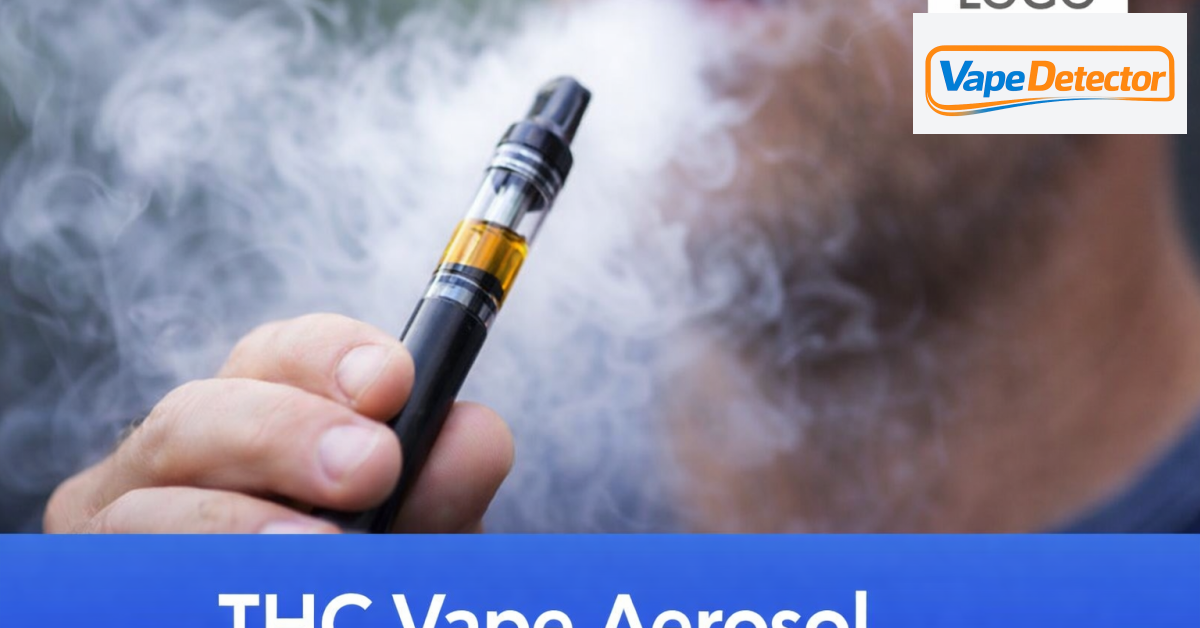
THC Vape Aerosol
THC vape aerosol is the airborne mixture released when a THC-containing vape liquid or extract is heated and inhaled, then exhaled into an indoor space. The aerosol behaves differently from smoke and its presence often persists beyond the visible “cloud”, which affects indoor air quality, cleaning needs, and monitoring.
UK organisations and property managers often deal with THC vape aerosol through no-smoking and no-vaping rules, building ventilation standards, and incident reporting processes. Clear terminology helps decision-makers choose realistic controls, including detection, ventilation, and cleaning.
What THC Vape Aerosol Means
THC vape aerosol describes a suspension of tiny liquid and solid particles in air that originates from a THC vaping device. The term covers the emitted particles and gases, not only the visible plume.
UK compliance decisions depend on whether a space has vaping restrictions, safeguarding duties, lease conditions, or health and safety responsibilities. THC vape aerosol matters because it affects exposure pathways, odour complaints, and the reliability of vape detection systems.
THC, Aerosol, Vapour, And Smoke: Key Differences
THC (tetrahydrocannabinol) is a cannabinoid that produces psychoactive effects. THC products used for vaping often include additional compounds that influence how the emissions behave indoors.
Aerosol is a mixture of airborne particles and droplets suspended in air. Vapour is a gas phase substance, but “vapour” is commonly used as a catch-all term for what vaping produces, even when most of the visible cloud is aerosol droplets. Smoke is produced by combustion and contains a different mix of combustion by-products and solid particles.
THC vaping generally involves heating rather than burning. THC vape emissions therefore sit closer to aerosol than smoke, although overheating and device conditions influence how “smoke-like” the emissions become.
Why The Term “Aerosol” Matters For Detection And Safety
Aerosol behaviour drives how long emissions remain suspended, how far they spread, and where they deposit. Sensors and detectors often respond to particle concentration changes, optical scattering, volatile organic compounds (VOCs), or combinations of these signals.
Safety and compliance controls work more reliably when they target aerosol reality rather than the visible cloud. A room may look clear while aerosol particles remain present, especially in low-ventilation areas and corridors that share airflow.
How THC Vape Aerosol Forms
THC vape aerosol forms when a heating element raises the temperature of a THC-containing formulation and creates airborne droplets and gases. The aerosol then changes as it mixes with cooler air, which affects particle size, visibility, and settling.
Formation mechanics matter in UK indoor settings because device type, user technique, and room conditions influence both exposure risk and detector response. A detector tuned for typical e-cigarette aerosols may behave differently around THC formulations and overheating events.
Heating, Atomisation, And Condensation
Heating converts part of the liquid or extract into a gas phase and also produces fine droplets through atomisation. The mix exits the mouthpiece as a warm plume containing droplets and vapour-phase compounds.
Condensation occurs as the plume cools. Cooling increases droplet formation and growth, which can increase visibility and deposition on nearby surfaces. Rapid cooling also changes how long particles stay airborne and how a sensor “sees” the event.
Particle Size, Droplet Behaviour, And Suspension Time
Particle size affects suspension time and transport. Smaller particles remain airborne longer and travel further with airflow, while larger droplets settle faster and deposit near the emission source.
Droplet behaviour also changes after exhalation. Evaporation can shrink droplets, while condensation and coagulation can increase particle size. These dynamics influence how quickly concentrations drop and how likely residue becomes on walls, ceilings, and soft furnishings.
Factors That Change Aerosol Output (Device, Power, Liquid, Technique)
Device design influences aerosol volume and particle distribution. Cartridge systems, disposable vapes, and refillable devices heat liquids differently and produce different plume characteristics.
Power and temperature settings alter output significantly. Higher power often increases aerosol mass and raises the chance of thermal degradation by-products. Technique also matters because longer puffs and deeper inhalation change how much aerosol is produced and exhaled.
Formulation affects output because viscosity, boiling behaviour, and additives influence droplet formation and condensation. Cutting agents and thickeners often change visible plume density and residue potential.
What THC Vape Aerosol Contains
THC vape aerosol contains a combination of cannabinoids, flavour compounds, solvents, and thermal by-products. The exact content depends on the THC product, device temperature, and whether the material is regulated or illicit.
Content matters for UK environments because additives and by-products influence odour complaints, irritation reports, cleaning effort, and the risk of detector false alerts. Unknown or inconsistent formulations also reduce the predictability of both health impacts and sensor performance.
Cannabinoids And Terpenes
Cannabinoids in THC aerosol include THC and, depending on the product, other cannabinoids. The fraction that remains aerosolised depends on temperature, formulation, and how much condenses in the mouthpiece and upper airway.
Terpenes provide aroma and contribute to perceived flavour. Terpenes also contribute VOC signals and odour, and they influence how the plume behaves as it cools and mixes with indoor air.
Solvents, Thickeners, And Cutting Agents
THC vape formulations often use solvents or carriers to control viscosity and wick performance. Some products use thickeners or cutting agents that alter appearance and aerosol density.
Unregulated products present additional uncertainty because additive identity and concentration vary. Variable formulations make it harder to predict residue, lingering odour, and the likelihood of irritation complaints.
Thermal By-Products And Irritants
Thermal by-products form when compounds break down due to heat, overheating, or “dry hit” conditions. Higher temperatures generally increase the chance of degradation products and harsh-tasting emissions.
Irritants in the aerosol phase contribute to throat and eye irritation for some occupants, especially in enclosed spaces with poor ventilation. The risk profile changes with formulation and heating conditions, so blanket assumptions about “safe vapour” do not fit real-world THC products.
Residue And Surface Deposits
THC vape aerosol deposits residue on surfaces as droplets settle and as vapour-phase compounds adsorb onto materials. Residue tends to accumulate near where vaping occurs most often, including toilets, bedrooms, stairwells, and corridors with stagnant air.
Surface deposits affect cleaning frequency and odour persistence. Soft furnishings and porous materials hold odorous compounds longer than hard, non-porous surfaces, which changes remediation effort in rental and hospitality settings.
How THC Vape Aerosol Spreads Indoors
THC vape aerosol spreads according to airflow patterns and building pressure differences. The plume does not stay in one room, especially when doors open, extract fans run, or corridors act as pressure pathways.
Indoor spread matters in UK properties because complaints and detection events often occur away from the original vaping location. Smoke-free and vape-free enforcement becomes harder when emissions migrate into shared spaces.
Airflow, Ventilation, And Room Pressure
Mechanical ventilation and natural ventilation both influence transport. Extract systems can pull aerosol into adjacent areas, while supply systems dilute concentrations but also distribute emissions if airflow is poorly balanced.
Room pressure drives movement under doors and through service penetrations. Positive pressure rooms push air outwards, while negative pressure rooms draw air in from corridors or neighbouring rooms, carrying aerosol with it.
Temperature, Humidity, And Re-Aerosolisation
Temperature and humidity affect condensation, evaporation, and how compounds partition between air and surfaces. Warmer conditions can increase evaporation of some deposited compounds, while cooler surfaces promote condensation and deposition.
Re-aerosolisation occurs when deposited compounds re-enter the air due to disturbance, cleaning, or changes in temperature. Re-aerosolisation complicates odour complaints and can produce intermittent sensor alerts even after active vaping stops.
Odour Versus Aerosol Presence
Odour and aerosol do not track perfectly. Odour compounds can remain noticeable at low particle concentrations, and some aerosol events produce limited odour depending on formulation and ventilation.
A space that “smells of cannabis” does not prove active aerosol presence at that moment, and a low-odour event does not mean aerosol is absent. Property policies and incident handling work better when odour is treated as one indicator rather than definitive evidence.
Detection Of THC Vape Aerosol
Detection of THC vape aerosol usually relies on measuring airborne changes that correlate with vaping, rather than measuring THC molecules directly. Detection choices depend on the risk setting, required response time, and how evidence is used in UK safeguarding and property management processes.
Detection reliability matters because enforcement actions, tenancy decisions, and safeguarding interventions require defensible processes. Clear understanding of sensor limits reduces over-reliance on single alerts and supports proportionate incident handling.
For a practical overview of sensor inputs and limitations, see what what vape detectors detect in real indoor environments.
What Sensors Measure (Particles, VOCs, Optical Signatures, Ion Mobility)
Particle-based sensors measure changes in airborne particulate concentration. Optical methods often rely on light scattering, which responds strongly to droplet-rich aerosols.
VOC-sensitive sensors respond to volatile compounds associated with vaping formulations and flavourings. Some systems use multi-sensor patterns, combining particulate, VOC, temperature, and humidity signals.
Ion mobility approaches separate and detect ionised molecules in air. Ion mobility techniques can identify particular chemical signatures in some contexts, but practical deployment depends on device design, calibration, maintenance, and operational constraints.
THC-Specific Detection Versus Proxy Detection
THC-specific detection aims to identify THC or closely related markers. True THC specificity is technically challenging in general indoor monitoring because airborne concentrations vary, compounds adsorb to surfaces, and interference occurs from other VOC sources.
Proxy detection identifies vaping activity rather than THC itself. Proxy detection often provides faster and more practical monitoring in buildings, but it does not prove the substance used. UK policies therefore often treat alerts as an indicator for investigation rather than a definitive substance identification.
Real-World Challenges: False Positives And False Negatives
False positives occur when non-vape sources produce similar sensor signals. Aerosol sprays, steam, dust disturbances, cleaning chemicals, and fragranced products can trigger certain sensor types depending on sensitivity and thresholds.
False negatives occur when aerosol concentrations remain below detection thresholds, when ventilation dilutes the plume quickly, or when device output is low. Placement errors also cause missed detections, particularly in high airflow zones where the plume bypasses the sensor.
Operational practice reduces these issues by combining sensor alerts with contextual checks, maintenance logs, and pattern analysis rather than treating single alerts as conclusive.
Detection Range, Placement, And Response Time
Detection range depends on room volume, airflow, and sensor design. A detector placed too close to vents may under-read due to dilution or over-read due to airflow carrying aerosol directly over the sensor.
Placement decisions work best when they match the risk behaviour in the setting. Toilets, changing rooms, stairwells, and bedrooms often present higher likelihood of covert vaping, while large open areas often require different coverage and thresholds.
Response time matters for safeguarding and enforcement because faster alerts support timely staff response. Slow response and long averaging windows reduce nuisance alerts but also reduce the chance of locating the source quickly.
THC Vape Aerosol In UK Settings
UK settings face different constraints on privacy, safeguarding, tenancy enforcement, and staff response. THC vape aerosol often appears as a behavioural management issue as much as an air quality issue.
Policy and monitoring approaches need to align with building rules, employer policies, tenancy agreements, and safeguarding procedures. The practical aim is consistent handling of incidents and reduction of repeated exposure in shared indoor environments.
Workplaces, Hospitality, And Public Indoor Spaces
Employers and venue operators typically manage vaping through workplace policies and site rules, supported by signage and staff training. Public indoor spaces often face mixed-use challenges, including toilets and service corridors where vaping is harder to supervise.
Hospitality environments also manage customer experience impacts such as lingering odour and complaints from other guests. Ventilation design and housekeeping procedures often determine whether problems persist across rooms and corridors.
Schools, Colleges, And Student Accommodation
Education settings often treat vaping as a safeguarding and behaviour issue alongside health considerations. Toilets, stairwells, and corridors near exits often become repeat locations for covert use.
Student accommodation adds complications due to mixed private and shared spaces. Clear incident processes and proportionate responses reduce disputes and support consistent enforcement across multiple residents.
Rental Properties, HMOs, And Social Housing
Landlords and managing agents often manage THC vape aerosol through tenancy conditions, property inspections, and complaint handling. HMOs and social housing frequently involve shared corridors and ventilation routes that spread odour and aerosol between households.
Cleaning and redecoration costs become relevant where residue and odour persist. Documentation of complaints, inspections, and remediation steps supports fair handling and reduces conflict when responsibility is disputed.
Health And Compliance Considerations
Health considerations relate to exposure to airborne particles and chemicals, especially in enclosed spaces and where vulnerable occupants are present. Compliance considerations relate to site rules, employer duties, tenancy conditions, and safeguarding expectations.
UK decision-making often focuses on preventing repeated exposure in shared indoor spaces and ensuring incidents are handled consistently. Clear records and transparent processes reduce escalation and support proportionate outcomes.
Exposure Pathways And Second-Hand Aerosol
Second-hand aerosol exposure occurs when others inhale the airborne mixture after exhalation. Exposure level depends on ventilation, proximity, frequency of events, and how quickly the aerosol disperses or deposits.
Surface residue also creates indirect exposure pathways when compounds deposit on frequently touched surfaces. Cleaning controls reduce this pathway, especially in environments with children and shared facilities.
Policies, Signage, And Enforcement Practices
Policies define where vaping is prohibited, what counts as a breach, and how staff respond. Signage supports compliance when it matches the policy wording and appears at decision points such as entrances, toilets, and corridors.
Enforcement practices work best when they are consistent and evidence-based. A vape detector alert typically supports a check and a record, rather than acting as the sole basis for a serious sanction, especially where substance identity is uncertain.
Incident Handling And Record-Keeping
Incident handling benefits from a standard process that includes time, location, staff observations, and any relevant environmental conditions such as strong odour or visible haze. Maintenance records for detectors and ventilation systems support interpretation of alerts.
Record-keeping also supports pattern identification, such as repeated alerts in one toilet block at specific times. Pattern-based intervention often reduces incidents more effectively than reacting to isolated events.
Reducing THC Vape Aerosol Impact Indoors
Reducing indoor impact relies on a combination of prevention, dilution, filtration, and cleaning. No single control removes all risk because aerosol behaviour depends on airflow, formulation, and user behaviour.
UK sites often achieve better outcomes by matching controls to the building and the use-case. A student block corridor, a pub toilet, and an office meeting room present different airflow patterns and response constraints.
Ventilation And Filtration Options
Ventilation reduces concentration through dilution and removal. Mechanical extract in high-risk rooms reduces lingering aerosol when systems run effectively and are maintained.
Filtration options such as portable air cleaners reduce airborne particle concentrations when sized correctly for the space and positioned to avoid short-circuiting airflow. Filtration does not replace source control, because new emissions quickly raise concentrations again in small rooms.
Cleaning Approaches For Residue And Odour
Cleaning removes deposited residue and reduces odour sources on hard surfaces. Soft furnishings often require deeper cleaning methods because odorous compounds adsorb into fabrics and foams.
Odour masking products often create additional VOC signals and can complicate sensor readings. Removal-focused cleaning and adequate ventilation after cleaning reduce both odour persistence and nuisance alerts.
Practical Controls In High-Risk Areas
High-risk areas usually include toilets, stairwells, plant corridors, and rooms with limited natural ventilation. Control design often combines environmental measures with operational routines.
Practical controls include improving extract performance, keeping doors and vents functional, and scheduling targeted cleaning where residue accumulates. Staff response protocols and consistent escalation routes reduce repeat incidents in the same locations.
FAQs
What Is THC Vape Aerosol?
THC vape aerosol is a suspension of tiny droplets and particles in air produced when a THC vape formulation is heated and inhaled, then released into the environment through exhalation and device leakage.
THC vape aerosol often contains cannabinoids, terpenes, carrier liquids, and thermal by-products, with composition varying by product and device temperature.
How Long Does THC Vape Aerosol Stay In The Air?
THC vape aerosol persistence depends on ventilation rate, room volume, airflow pathways, and particle size distribution. Poorly ventilated small rooms often retain detectable aerosol longer than larger rooms with effective extract and supply air.
Surface deposition reduces airborne levels over time, but deposited compounds can contribute to lingering odour and intermittent re-release under certain conditions.
Does THC Vape Aerosol Leave Residue On Walls And Furniture?
THC vape aerosol leaves residue when droplets settle and when vapour-phase compounds adsorb to surfaces. Residue tends to be more noticeable on cooler surfaces and in areas where vaping occurs repeatedly.
Soft furnishings and porous materials retain odorous compounds longer than painted walls and hard surfaces, which increases cleaning effort.
Can A Vape Detector Identify THC Specifically?
Many vape detectors identify vaping activity using proxy signals such as particles and VOC patterns. Proxy detection does not confirm THC content because nicotine vapes, fragranced aerosols, and some cleaning products can produce similar signals.
THC-specific detection requires targeted chemical identification methods. Practical deployment depends on the detection technology, calibration, and operational constraints of the site.
What Causes False Alerts From Vape Sensors?
False alerts occur when sensors respond to non-vaping sources that resemble vape emissions. Common triggers include steam, aerosol sprays, dust disturbance, strong fragrances, and certain cleaning chemicals.
Poor placement near vents and doors also increases false alerts because airflow can produce rapid concentration changes that mimic vaping events.
Where Should A Vape Detector Be Installed To Detect THC Aerosol?
Placement works best where vaping is most likely and where airflow carries the plume past the sensor without immediate dilution. Toilets, changing areas, stairwells, corridors outside toilets, and secluded communal areas often present higher detection value.
Installation also benefits from avoiding direct proximity to supply vents, extract grilles, and doors that create fast-moving airflow that reduces signal stability.
Conclusion
THC vape aerosol is an airborne mixture of droplets, particles, and gases that behaves differently from smoke and often persists beyond the visible cloud. Composition and behaviour vary with device design, formulation, power settings, and indoor conditions, which affects spread, residue, and odour.
UK settings manage THC vape aerosol through clear policies, consistent incident handling, appropriate ventilation and cleaning, and realistic use of detection that recognises the limits of substance identification.